
|
||||||||||||||||||||||||||||||||||||||||||||||||||||
|
Brother printer with HTTP server
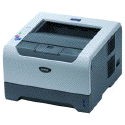 Based on a recommendation from Julian Milenbach, I bought a Brother HL-5250DN printer, and so far I'm quite happy with it. You can set it up to connect via USB 2.0, which I tried for a few days with good results, but it can also connect via Ethernet, which I'm using now, and that's much more interesting. The cool thing which is becoming almost routine, is that it has a built-in HTTP server -- and it works quite well. Weird thing, the printer has an email address. Not sure what this means. Can you mail jobs to it? Oy! Based on a recommendation from Julian Milenbach, I bought a Brother HL-5250DN printer, and so far I'm quite happy with it. You can set it up to connect via USB 2.0, which I tried for a few days with good results, but it can also connect via Ethernet, which I'm using now, and that's much more interesting. The cool thing which is becoming almost routine, is that it has a built-in HTTP server -- and it works quite well. Weird thing, the printer has an email address. Not sure what this means. Can you mail jobs to it? Oy!  Mike Arrington was over to watch the SuperBowl on Sunday, and I demo'd my Denon receiver with its built-in HTTP server. Following up by email he encouraged me to write it up. It's hard for me to write a feature story like the ones Mike does on TechCrunch, I prefer to write things as they occur to me, and so the story is here, but it's in chunks spread out over days.
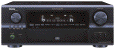 It's hard to explain why it's so exciting to be able to control a consumer device like a stereo through a web browser. I have explained it verbally, often to very technical people, but the only thing that makes the point is a demo. The idea of an HTTP server in a stereo sounds like a gimick, people say they get it but you can tell they don't because they can't put it all together to see that you could use a laptop (or a cell phone for that matter) to control the stereo. I think you have to live this stuff for years to see how exciting it is. But the really coooool thing is that there's someone at DENON who sees it too, someone with the resources to get it into the product. It's hard to explain why it's so exciting to be able to control a consumer device like a stereo through a web browser. I have explained it verbally, often to very technical people, but the only thing that makes the point is a demo. The idea of an HTTP server in a stereo sounds like a gimick, people say they get it but you can tell they don't because they can't put it all together to see that you could use a laptop (or a cell phone for that matter) to control the stereo. I think you have to live this stuff for years to see how exciting it is. But the really coooool thing is that there's someone at DENON who sees it too, someone with the resources to get it into the product. |
Last update: Thursday, June 3, 2010; 4:00:29 PM
Mail:
|
|||||||||||||||||||||||||||||||||||||||||||||||||||
|
© Copyright 1997-2010 Dave Winer. Last build: 6/3/10; 10:16:07 PM. "It's even worse than it appears." Previous / Next |
||||||||||||||||||||||||||||||||||||||||||||||||||||

 scriptingnews1mail at gmail dot com.