New product release today New product release today 
Ladies and gentlemen, boys and girls...
It's with much anticipation that I say this.
I have a new product that may be familiar to those of you who used Radio 8, and in other ways may be completely new.
The idea is simple.
There's a convergence between big screen high-definition televisions, and photography as an Internet based activity.
The purpose of this product is to smooth that convergence, to make it easy to set up a connection between the Internet and your television. To allow photography to come into your living room in new, powerful and easy ways.
Think of it as the networked living room and you'll understand the vision.
Some of the work I've done is technical, some is user interface, and some is working with media organizations to try to create a comfort level, or at least a spirit of Let's Give This A Try.
In the latter case, it's much like working with the NY Times to get their news headlines and summaries to flow through Radio's RSS aggregator in 2002. Only this time we're working with photographs, and we think, the best news photographers in the world. And the pictures are beautifully high-def, they look really great when displayed on LCD and plasma screens. I use it with my 52-inch Samsung and 46-inch Sony. Of course what looks great on a wall, also looks great on a 15-inch Macbook or 24-inch iMac. 
And while we connect those pros with your TV, it's equally important that we connect your friends and families too. One of the early testers found the pictures that Doc Searls uploads to Flickr a great revelation. Me too. That's because Doc is not only a great photographer, he's also a great story-teller. I find that I can follow the lives of far more friends visually than I can through text messages (which I love to do too!).
Viewing great photos on bigscreen TVs, desktops and laptops -- that's one focus, but not the only one.
I wanted to provide a complete two-way tool for people who love Flickr, as I do.
Why Flickr? Well, they've got this great thing called an API. It makes it possible for people like me to make software that runs on a desktop computer that does things like automatically backing up your new photos every night, and providing a drop-folder on your desktop for quick uploads. (It understands tags too, it's incredibly simple.)
We also made it easy to post pictures you like to Twitter. Why Twitter? It's that API thing again. They made it easy for us to love them. I wish more network service developers understood how powerful this outstretched hand is.
But that's not all!
Not by a long shot.
The reason all this will be so familiar to Radio 8 users is that it builds on the same engine, the one that was released as open source in 2004. So I've been working on other tools to drop into this base platform and once we have a good-sized base of people using it for "really simple photos" on the desktop, there will be other tools. And because it's an open platform, other developers can do the same. Not saying they will, but they can.
Anyway, I'm in the last stages, preparing the download site, and a FAQ, and tweaking the installer.
One caveat, the first beta release is Mac only. That's because I'm doing all my work on the Mac, and this is a one-man show. Later we will work it out for Windows too, and with a bit more work and a bit more luck, for Linux.
It should be ready before the sun goes down today.
Phil Windley: "The XBR4 already has a DVI input, so hooking up ought to be a breeze and getting good pictures on the thing would be wonderful."
 12/27/2007; 8:41:14 AM 12/27/2007; 8:41:14 AM
 I want to know the intent of the product I want to know the intent of the product
I've been saying this ever since I started blogging.
When you have a product to announce, start a blog (if you don't already have one) and announce it.
Before there were blogs, I wished Infoworld or PC Week would give space to the lead developer of the product, whether he or she is a marketer or technical, even the CEO if they wouldn't assign a former reporter or ad guy to write it, and tell us what you meant when you designed this product. Who were you thinking of and what would they do with it. And where does it go? What does 2.0 look like if it's 1.0 or 3.0 if it's 2.0.
I like it when people like Zuckerberg, Andreessen or Canter write a blog post that tells you without pulling any punches what the intent of the product is, in their own words. I'd like to hear what they said to the team that worked on it. I'd like to use my imagination. That's why I don't like Steve Jobs' keynotes, he's telling you what Eddie Haskell would say about the product to Mrs. Cleaver.
You never get the intent when it's filtered by the press. And many of the people that call themselves bloggers, love them and bless them, aren't anything like bloggers, and they're everything like the bored hired writers that used to work at CNET and Fortune. In fact, many of them are exactly like them (because they are them).
We live in the age of DIY, that means if you have something to say, just say it.
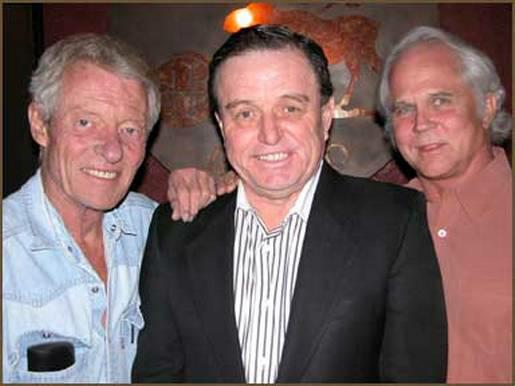
PS: Here's a picture of three child actors from Leave It To Beaver, taken when they're in their fifties. From left to right, Eddie Haskell, Beaver and Wally. Time Waits for No One.
12/26/2007; 4:09:56 PM
Blogger of the Year
There was a time, a long time ago when I thought we'd have awards here on Scripting News. I'd nominate several blogs in different categories and the readers would vote and we'd have winners, and could celebrate, and prepare for next year, with some idea of what we value in blogging.
But the first year I did it, 2001, there was a huge outcry of anger at my hubris in thinking I could play a role in defining some form of blogging excellence. The anger was so loud that we only did it that once.
We're getting close to the end of another year, they go so fast these days, one of the last things my departed Uncle Ken said to me was that it gets ridiculous near the end, time runs so fast, it's December just after it's January and then of course it's January again, until there's no more time.
 This morning I was doing some work at my desk in the upstairs study, looking out over San Francisco Bay and the Golden Gate Bridge in the distance. On the stereo I'm listening to old George Harrison tunes, and decided to catch up reading Naked Jen's blog. After reading the last three posts, my eyes welled up, and my heart so proud of her for being so true to herself and sharing so much of her feelings so nakedly, at the very same time just by coincidence Harrison's All Things Must Pass is playing.
Sunrise doesn't last all morningA cloudburst doesn't last all daySeems my love is up and has left you with no warningIt's not always going to be this grey
How funny. These are exactly the words I want to say to Jen. I've been where you are, honey. When it feels so bad you don't know how you're going to go on, one foot follows the other anyway, at first you're just going through the motions, but then, you start to heal and without marking it with any special ceremony, you find life is flowing. You still miss what you lost, of course.
Daylight is good at arriving at the right timeIt's not always going to be this grey
Truth is, while it feels like you're stopped, you never really are as long as your heart keeps beating and you keep breathing. You want to stay where you are, but you don't, you can't.
I've often described Jen to others as the perfect blogger. What she does is exactly what I hoped people would do with the medium many years ago. Holding Hands in Cyberspace. Not being celebrity, just being yourself. A new form for a human body, not only intellectual or physical or emotional, all those things and more. Something new.
So I'm giving an award this year, Blogger Of The Year to the person who I feel exemplifies the best of blogging.
Not because she's sad, or hurt, rather because she is herself.
12/24/2007; 10:36:56 AM
Holiday greetings!
 Tomorrow and the next day are big Jewish holidays, it's the time when we all go out for Chinese or Indian food, and talk about anything but Baby Jesus. On Christmas Day I'm going to Santa Cruz to hang with Naked Jen, who has a tradition of seeing three of the movies that come out for the holiday, and then we're going out for a Jewish celebration probably with Chinese or Indian food.
To celebrate the holiday I've brought back the photographic Scripting News banner. It chooses a random graphic every time I update the home page. I may have some fun with a CGI script that chooses a random graphic every time you refresh the page. Let's see. (Update: done!)
 In 2004 I recorded a podcast for the holiday that was the telling of O Henry's sweet story of love and generosity, The Gift of the Magi. I was reminded of it seeing several interviews with Carolyn Kennedy, the daughter of President Kennedy and Jackie O, who wrote a book about Christmas that included this story. It seems appropriate tonight to link back to the telling of the story. I was in Seattle when I recorded it, about to leave for Florida. It was the year of podcasting.
Speaking of podcasts, I just listened to a podcast of today's Meet the Press interview with Presidential candidate Ron Paul. What a refreshing person to be running for political office. He's very intelligent and talks back when Russert tried to corner him. I probably won't ever get a chance to vote for him, and I don't endorse him as a candidate, but I do endorse listening to the podcast. It's excellent politics. Refreshing.
12/23/2007; 6:18:52 PM
What I learned about security, privacy and Apple
 First, thanks for the great comments on yesterday's post about Apple and the hard disk of my MacBook. People were universally positive and helpful, and I can say I really learned some really important things as a result of the discussion.
First, the cost of the data on the hard disk swamps the value of the value of the disk and even the value of the computer. There was source code on the computer, and other information, which if it fell into the wrong hands, could cause some serious problems for me.
I have no agreement with Apple that covers the security or privacy of the data. As far as I know they think they own the contents of the disk as well as the disk itself. The experience I had with them actually makes me think they probably do feel its theirs. This from a company that takes the security of its own private information very seriously, they seem to have almost no regard for the security of its customers' information.
You have no control over when a hard disk will crash, or any foreknowledge of when it's even likely to crash. So there's no way to protect against this kind of security issue. And that's what it is. What kind of sense does it make to invest in firewalls, and of what value is Apple's claim that Macs are inherently more secure, when all the data on one of my computers is now completely out of my control forever?
I'm not so concerned about the privacy issues, but I could imagine that other people might be. And if identity thieves are not aware of this backdoor way to get access to private information, how long before they are? Security experts always warn us that obscurity is not a good strategy for security.
So what to do?
Basically I've given up on trying to get Apple to do the right thing and give me my disk back. Some people at the Emeryville store are well-itentioned, and are just naive about the problems that can come when you trust people with all your data. Others just don't care. Either way it seems unlikely that I'm going to get it back, and even if I do, it's been out of my control for too long.
I'm going to go through the tedious job of changing the passwords on all my sensitive online accounts. That was overdue anyway. And next time a laptop blows its hard disk, I'm either going to replace it myself and shred the old disk, the same way I'd shred any sensitive documents before throwing them out, or just throw away the whole computer. I know this isn't green, but there seems to be no other course that's anything close to secure.
And always be aware that you could lose a laptop, or it could be stolen. So far it seems that this is not yet an identity theft concern, but you can't be sure, and it won't be long before it is.
Thanks again for all the good info, advice and vibe.
12/23/2007; 11:09:55 AM
Macs are even more expensive than I thought
 When I got back from Europe my black MacBook wouldn't boot, it just sat there with a disk icon and a flashing question mark. So I made an appointment at the Apple store in Emeryville to have it looked at.
When I got there, there was no wait, they were calling my name. The repair guy opened the Mac, took out the disk, went into the back room, and came back saying the disk was bad, I'd need a new one. How much? $160. How large? 80GB. I've been buying disks lately, I bought a 500GB disk for $150 a few weeks ago, and just bought a 1TB disk for $280. So I knew that $160 for 80GB, even in a portable form factor, was probably a ripoff, but I figured here I am now, I can get the computer working, so I said OK and shrugged it off.
The new disk went in, I signed a form, and was about to leave and asked for the old disk and the clerk said it was his not mine. They were going to send it back to the manufacturer. I figured it would be refurbished and sold cheap to someone in a third world country. Little did I suspect.
 He got his supervisor. She insisted that the drive belonged to Apple, even though I had paid an inflated price to buy a new one. She showed me the language on the reverse side of the form I signed. It was even worse than she had said. There was no guarantee that the drive they had just put in my Mac was new! It might have been someone else's defective drive. I said it was outrageous. I grabbed a copy of the agreement and left.
I scanned the agreement, highlighting section 4, the part the store manager cited.
Now there are a lot of speeches I could give. Here are a few.
1. I buy Macs knowing they're more expensive, but I expect to be treated better. I drive a BMW for the same reason. Luckily there's Mercedes, Audi, Lexus, et al to keep BMW customer service in top form (which it has been so far, I'm on my fourth BMW). I always say this -- Apple service is outstanding when you buy something, but it falls down, often, when you need it fixed. Not always, but often.
2. There are consumer protection laws that require auto repair shops to offer you the old parts. Why doesn't that apply to computer repairs? Or maybe it does.
3. Apple prices are ripoffs, but this is an unusually heinous ripoff. To charge such inflated prices for used parts, they should have some shame.
4. They don't seem to have any fallback when there's a dissatisfied customer. As an Apple shareholder, I think it would work better if store personnel felt they were guardians of the company's reputation. Consider for a moment that you are ripping off the customer. What tools can you offer the sales person to make good with the customer? Could you let the customers who object take their drives home? Could you offer a discount coupon on the next purchase, or free premium support for a year? That they let me walk out of the store, a person who spends thousands of dollars with Apple, feeling like I had been abused, says they haven't got all the glitches out of their retail process.
5. Falling back on the fine print is really lame. I think they should tell you up front, before they do the work, that you're not getting the old drive back. What if the data on the drive can be recovered? What if there are credit card numbers and other personal information on the drive? Source code? Trade secrets? Does Apple really want to treat their customers privacy so shabbily? For what? Don't they already make enough money off the $160 price for the new disk? It's amazing that a company can make it this far, having such special customers, and rarely if ever acknowledging it.
12/22/2007; 9:22:57 AM
Note to Doc
Blogs are one of the few Vendor Relationship Management tools we have that actually work.
Someday we'll have elaborate information systems that allow a negative customer experience, one with privacy and security implications, to propogate far and wide, quickly. The vendor will feel pressure from customers immediately. Today our ability to influence vendors is very limited. But it isn't going to stay that way for long.
I note that there's never any fine-print gotchas when I'm about to make a $3500 purchase from Apple. It's all smooth sailing. It's only when my only power is to blog the experience that they hit me with the bad news. So our response has to be to make the blogging experience more powerful. (Interestingly this is where the Edgeio idea might have had some sway, not in selling products to customers, but selling information about vendors to customers (and of course competitors).)
This became part of the discussion in the previous post. I wanted to make sure Doc Searls saw this since he's been carrying the torch on VRM.
12/22/2007; 11:31:02 AM
My Long Bet with Martin Nisenholtz
In March 2002, I made a bet with Martin Nisenholtz about the relative importance of weblogs and the New York Times. I was and am a blogger, and Martin worked then, as he does now, for the Times. For the actual terms of the bet, read the piece on the LongNow site, and a story I wrote to announce the bet.
A few comments.
1. It seems now is the time to decide who won the bet, if either of us did.
2. The world that I hoped would come about did not. While blogs have broken many stories, they have not, in general, turned into the authoritative sources I hoped they would in 2002. When the blogosphere resembles journalism it's often the tabloid kind.
3. I wouldn't mind losing the bet. That is, I wouldn't mind if the Times fully embraced the web, and I suspect Martin wouldn't mind if blogs rose to the quality of the Times.
4. If the bet had been held a year later, it seems there would be a pretty good chance that Martin would have won the bet because they recently took down the firewall at the Times, allowing search engines to index the full content. In the past, articles would remain visible for a couple of weeks then you'd have to pay money to access them. I believe they have a special deal with Google and other crawlers that allow them to get past the membership wall. For most of 2007 the Times articles were behind the firewall, and were less likely to be pointed to (which is how they rise in rank at Google).
5. It certainly is fun to speculate, but the decision about who won belongs exclusively to the Long Now Foundation. They have to decide who determines what the top stories of 2007 are, and imho they should consult with search experts to determine how to do the queries. Apparently it makes a difference how you do it. But ultimately it's their decision.
6. Whether Wikipedia has more or less results seems to be a sidebar to the bet, which only talks about blogs and the Times.
7. Another interesting sidebar is rich media. In 2002, before podcasting had taken hold, before YouTube existed, it would have been hard to forsee the story of the South Carolina beauty queen, or the Don't Tase Me Bro guy. Questions about the future are always framed in the context of the past. Did the question Martin and I asked have any value in 2007, or did it just say something about the world of 2002?
Update: Paul Boutin who arranged the bet, apparently in conjunction with Google (I didn't know this) in 2002, weighs in.
12/21/2007; 9:30:02 AM
Could S3 be an end-user product?
 I've not made much of a secret of the fact that I've been working on a new product, and am getting close to offering it as a public pre-alpha thing for Mac users only.
It's fairly Flickr-centric, sucking photos down from Flickr in a variety of ways and pushing up photos in others. Like Radio 8 and Google Reader, it has the ability to maintain an output feed of stuff you want to pass on to friends and associates.
As I was developing this I wished that Flickr had the ability to store simple text files, because I needed a place to put an RSS 2.0 feed with enclosures on behalf of each user. Of course I used Amazon S3, but I had to implement my own lightweight identity system so that Juan couldn't accidentally or intentionally replace Alice's feed. If only every user had a place where they could store stuff that's net accessible so that once and for all we could stop inventing new places.
I was inspired to write about this when I read an Uncov review of Pownce where they reminded me that they were reselling S3 storage at a big markup. What if the users had their own S3 storage that they paid for themselves?
Then it occurred to me to ask if people thought S3 could be an end-user thing. I'd like to find out, so if some non-technical users who have Amazon accounts would like to try setting up an S3 account, I'd be interested in hearing how it goes. Here's an idea of how you get started.
1. You must already have an Amazon account. Nothing special about it, if you buy shirts or books or stereo equipment from Amazon, you use the same account for S3 storage. Already that's pretty easy, millions of people have Amazon accounts, right?
 2. Visit this page on Amazon, ignore all the stuff about objects and buckets. In the right margin is a big button that says "Sign up for this web service." Click the button. A very familiar page appears, asking you to sign into your Amazon account as if you were going to buy something (you are!).
3. From there, I'm not sure what you see, because I have already enabled my account. But the end result of signing up is that you get two strings with weird names: Your Access Key ID and Your Secret Access Key. Any software that would save a document in S3-space on your behalf would need these two strange strings. In return each document would have a URL just like any other document on the web. Nothing strange about that.
4. You could also use the space to store stuff using an FTP-like app that runs in Firefox called S3 Organizer. It's about as hard to use as the Mac Finder or the Windows Explorer, i.e. it's no challenge for a moderately geeky user. The cool thing about it is that you're able to share anything you upload into S3 space with anyone else. You can even use BitTorrent to access any file to save you bandwidth bills and distribute the load round the net. It's all very easy to do, imho.
As a developer who has to pay for his users' storage needs I would very much like to see users learn how to use S3 to store their stuff, so I can focus on writing software and fixing bugs instead of paying to store your stuff.
12/20/2007; 11:06:41 AM
I'm with Rex
Of course Apple is fascist scum for shutting down Think Secret.
Rex Hammock said the one thing that I as a Mac user have to say about the news.
"There's nothing positive about this settlement for my side."
Amen brother. I keep thinking "Someday Apple is going to regret that they took their customers so much for granted." But I know better. I used to say that, and then I switched to Windows in 1997 (that'll show em!) only to switch back in 2005. Every day I think of a new excuses to waste spend more money on Apple hardware. Apple doesn't pay for it, we do.
But we can hate them for what they did to Think Secret, as if they care, but we do anyway.
12/20/2007; 11:41:11 AM
CES, here we come!
 Thanks to PodTech, I'm going to CES again this year, and I'd like to see whatever it is that I should see. Suggestions please, in the comments.
I love devices that can be used for podcasting, for example something that fits in your pocket, has a battery, and wifi, and either is programmable by developers or includes a podcatcher. Is this the year of the podcatcher breakthrough?
I'm riding down on the PodTech bus with Scoble and ValerieWag and probably a lot of other coooolio bloggas (Marquis de Canta?). This time I hope to arrange my press pass in advance, and I want to meet lots of vendors who can send me review units through the year, so I don't have to pay for all the stuff I review. (More likely so I can save my money for Uncle Steve.)
And if you're a blogguh and you'll be there you might want to check out the BlogHaus that PodTech is hosting 24-by-7 at CES at the Bellagio.
Let's hope it's not too commercial, and we can have some good meetings and schmoozes and get some great work done.
Alternate theory: If they want to be overly commercial, go for it, then every blogger should get a free 1TB Seagate drive.
12/19/2007; 5:24:35 PM
Frozen peas
RSS makes Google Zeitgeist this year
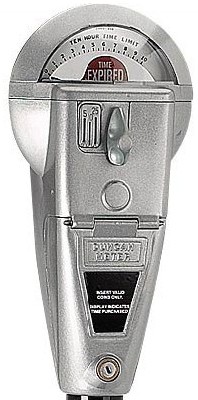
Parking meter
 12/19/2007; 11:43:04 AM
Does Twitter do enough?
A flashconf on fair use?
 There's been a mostly fantastic discussion about fair use in this neighborhood for the last few days.
It started when a photograph of Lane Hartwell's was used in a video spoof of the Billy Joel song "We Didn't Start the Fire."
The first I heard of this was in a Twitter post of hers where she said she was turning off access to her entire Flickr collection because this picture was used without permission. A series of communications with the people who did the video resulted in the video being taken down.
Later Mike Arrington, who is a lawyer, wrote a piece saying she didn't have right on her side, and that the video's use of her picture was probably fair use. I found Mike's piece compelling. Others took offense. It thought it was a useful part of the discussion.
I understand Ms Hartwell's point of view. I hate it when people copy a whole post of mine and paste it into theirs. But then I grab bits of images and put them on my blog and people rarely complain. The blogosphere is built on being loose about copyright and fair use.
I'm doing a deal with a content company and all these issues are coming up. We haven't been able to write a contract that covers all the things they want covered and make it possible for me to do what I need to do, and they want my product to work. It's a real mess we're in. Bloggers are supposed to be radicals when it comes to fair use and copyright, but that generalization doesn't work with many creative people. Hartwell's position in some ways is like the RIAA or MPAA, who bloggers often dismiss as clueless. How can we have it both ways? How can some defend her position yet not defend the entertainment industry?
 There's a lot to discuss here, and a lot of the discussion on the blogs has been informative and respectful. Not all of it, but to an unusually high degree.
So, I am interested in doing an in person "flash conference" on the subject of fair use in a few weeks.
I'd say next week if it weren't Christmas.
Most conferences are so boring. I want to do a conf on a hot subject when it's still hot in the blogosphere. This may be a good subject for such a quickly organized conference.
What do you think of the flash conference idea for this??
12/17/2007; 8:29:57 PM
How spam will likely enter the Twitter community
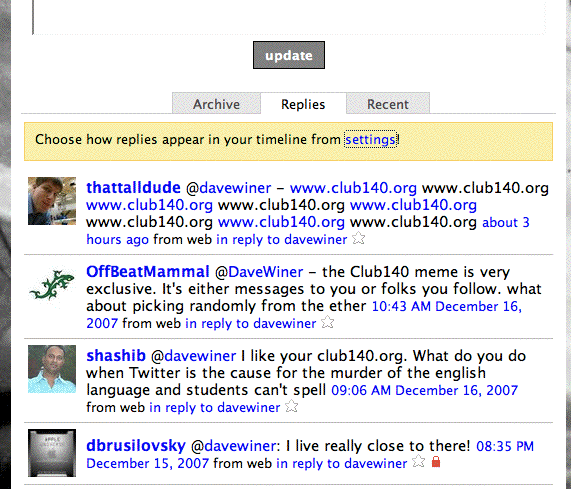
 I think I know how spammers are going to enter the Twitter world. It'll come in the form of replies, which basically function like email. You can direct a message with a url to anyone as long as you know their username.
Here's a screen shot that illustrates spam being sent to a hypothetical user. I didn't send it of course.
Another problem, the destination of the url is likely masked through the use of a shortener so the user could be clicking through to some really nasty place, with no way of knowing in advance that's where they're going. (Such messages probably wouldn't alert you in advance that they're about meds or poker or sex.)
The press and bloggers will run stories saying "Spam Comes to Twitter" and they'll be right, even though it won't be the main part of Twitter. Users will expect the company to do something about it, but I don't see what they can do other than eliminate the feature. Users will certainly want the ability to completely opt-out of replies.
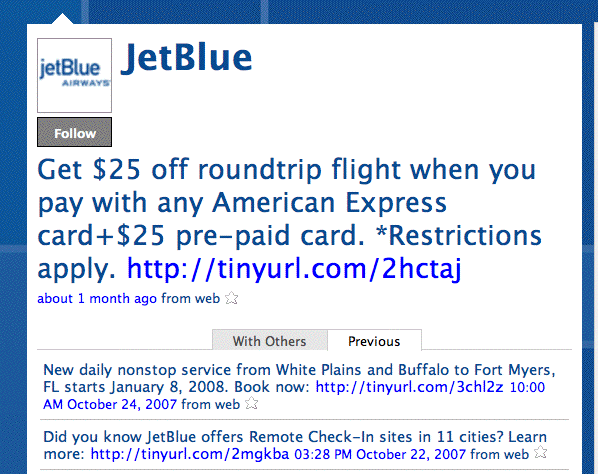
PS: I received direct messages saying that the JetBlue account is spam ( screen shot), but it is not spam, it's commercial information. Big diff. I would have to opt-in to see these messages in my stream. And if I got tired of it, I could opt-out. Spam is stuff that intrudes that you can't easily turn off.
12/17/2007; 1:12:30 PM
To celebrate the 10th anniversary of blogging
Here's a zip archive containing the source of the last 10 years of Scripting News.
Since Scripting News existed before blogs were invented, I went ahead and included the stuff that I blogged before there were blogs.
I hope this isn't too confusing!

 PS: Scott Karp asks if blogs can do journalism. Try this question. Can journalists do journalism? At best they seem to be able to copy each other, so mistakes propogate.
We've made so many accomplishments, both before and after the coining of the term, Karp for example starts with VIgnette. In 1997 if you told someone the functions of Vignette could be provided to millions of people virtually for free they wouldn't have believed you. (This is factual btw, I did, and wasn't believed.)
They also thought syndication would be done by the big publishing companies, something unweildy called ICE. We thought it should be simpler so that anyone could support it on both ends, and we won. The journalists have no record of this probably because they believed the big companies behind ICE and ignored the low-tech stuff. Jorn Barger used my software to do his "web log" -- why isn't that part of the story? Well it isn't if all you think is important is the choosing of the name.
12/17/2007; 1:45:20 PM
Scripting News is 10.71110623 years old today
Here's a formula that calculates how many years old Scripting News is on any given day.
double (clock.now () - date ("4/1/97")) / (60*60*24*365.25)
The answer is: 10.71110623.
It counts the number of days since its inception and divides by the number of days in a year. It accounts for leap years, assuming there is an extra 0.25 days each year.
12/17/2007; 5:29:07 AM
Bathtime in Clerkenwell
Click the pic to play.
12/16/2007; 4:55:57 PM
Okay let's get viral!
In NYC, the Second Ave Deli is coming back
Ed Levine writes a remembrance of the newest deli to open in NYC, with the same cast and food, at a new location, uptown (on 33rd St) and not on Second Ave.
New York sighs in relief. So does every deli fan in the rest of the U.S. and the world.
That seals it. I'm headed back to NYC before the end of the year.
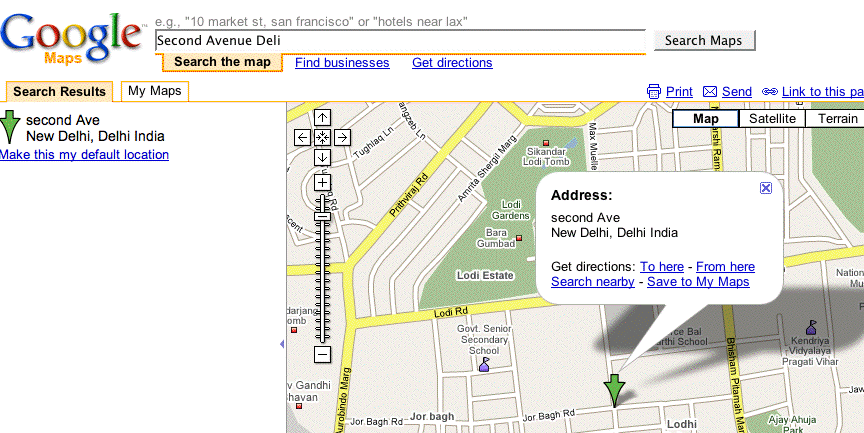
PS: A funny thing happened when I entered Second Avenue Deli into Google Maps.
12/15/2007; 12:22:55 PM
Amazon removes the database scaling wall
 When Amazon introduced S3 in March 2006 I knew I would use it and I was sure a lot of other developers would. I saw it as a solution to a problem we all have -- storage that scales up when needed, and scales down when not. Otherwise we all have to buy as much bandwidth as we need in peak periods. With S3, you pay for what you use. It makes storage for Internet services more rational. Later they did the same for processors and queuing. And a couple of days ago they announced a lightweight scalable database, using the same on-demand philosophy and simple architecture and API. It's going to be a huge hit and forever change the way apps are developed for the Internet.
I was explaining the significance of this to Scoble on the phone this morning. It's worth repeating here.
When I developed Frontier in the late 80s and early 90s my target platform was a modern desktop computer, a few megabytes of RAM, a half-gig of disk, a few megahertz CPU. A system capable of running Quark XPress, Hypercard or Filemaker. It would be used to develop apps that would drive desktop publishing. Later, it was used to generate static websites, then a demonstration of democracy (a multi-author ultra-simple CMS), then news sites, which became weblogs, then blogs, and editthispage.com, Manila, weblogs.com, and that's when scaling became an issue. (Later we side-stepped the scaling issue by moving most of the processing to the desktop with Radio 8.)
As we approached then cracked ease of use in web authoring, scaling became an issue, then the issue.
A Manila server would work fine for a few thousand sites, but after that it would bog down because the architecture couldn't escape the confines of a single machine it was designed for in the 80s. (Before you say it's obsolete, there still are a lot of apps for single machines. Perl, Python, JavaScript and Java share the same design philosophy.)
Same with weblogs.com. It worked great when there were a few thousand blogs. Once we hit 50K or so, we had to come up with a new design. Eventually we were tracking a couple million, and Frontier was hopelessy outclassed by the size of the problem.
If only Amazon's database had been there, both Manila and weblogs.com could have been redesigned to keep up. It would have been a huge programming task for Manila, but it would have made it economically possible.
 Today, when a company raises VC, it's probably because their app has achieved a certain amount of success and to get to the next level of users they need to spend serious money on infrastruture. There's a serious economic and human wall here. You need to buy hardware and find the people who know how to make a database scale. The latter is the hard problem, the people are scarce and the big companies are bidding up the price for their time. Now Amazon is willing to sell you that, to turn this scarce thing into a commodity, at what likely is a very reasonable price. (Haven't had time to analyze this yet, but the other services are.) Key point, the wall is gone, replaced with a ramp. If you coded your database in Amazon to begin with you will never see the wall. As you need more capacity you have to do nothing, other than pay your bill.
Further, the design of Amazon's database is remarkably like the internal data structures of modern programming languages. Very much like a hash or a dictionary (what Perl and Python call these structures) or Frontier's tables, but unlike them, you can have multiple values with the same name. In this way it's like XML. I imagine all languages have had to accomodate this feature of XML (we did in Frontier), so they should all map pretty well on Amazon's structure. This was gutsy, and I think smart.
They're going down a road we went down with XML-RPC and then SOAP. There may be some bumps along the way but there are no dead-ends, no deal-stoppers. All major environments can be adapted to work with this data structure, unless I'm missing something (standard disclaimers apply).
Their move makes many things possible. As I said earlier, if it existed when we had to scale weblogs.com, we would certainly have used it. One could build an open identity system on it, probably in an afternoon, it would be perfect for that. A Twitter-like messaging system, again, would be easy. It's amazing that Microsoft and Google are sitting by and letting Amazon take all this ground in developer-land without even a hint of a response. It seems likely they have something in the works. Let's hope there's some compatibility.
12/15/2007; 10:13:40 AM
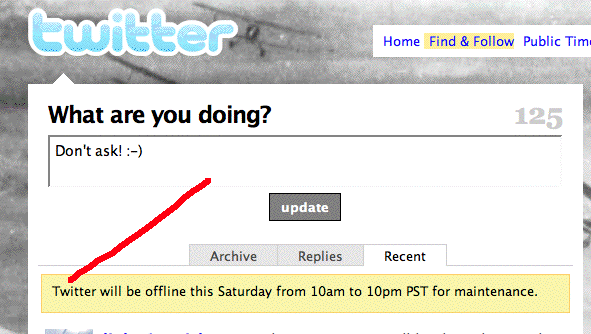
Twitter takes a break, we're awake, and wondering...
It can only mean one thing
 My black MacBook, purchased in May of last year, a day after the product was announced and a day after the computer it replaced, a white G4 iBook, died -- died itself earlier today. There was an evil clicking sound coming from the back. The spinning rainbow cursor. Reboot it to see a disk with a flashing question mark.
The death of the black MacBook can only mean that there's a new sexy Apple laptop coming soon. Somewhere between a fat version of the iPhone and a Sony Vaio. Hope it has a real keyboard, not a virtual one.
12/14/2007; 2:05:33 PM
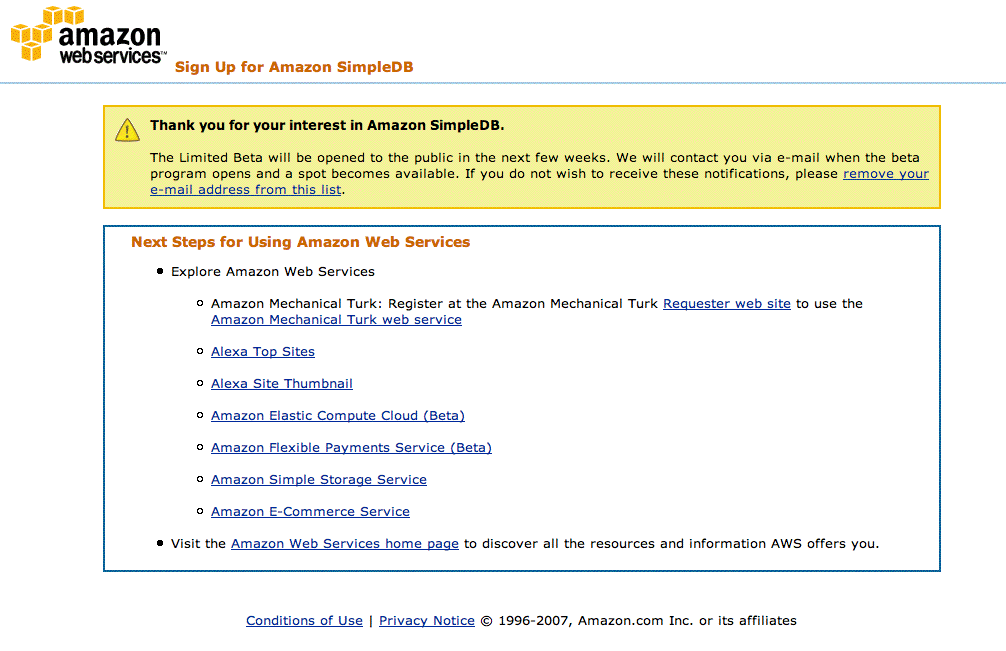
Amazon's database
A note from Jeff Barr that Amazon has announced the database companion to S3.
No doubt I'm going to use it.
I signed up. It's not open yet.
12/14/2007; 6:00:20 AM
U.S. Blues
I'm Uncle Sam/that's who I am Been hidin' out/in a rock and roll band Shake the hand that shook the hand Of P.T. Barnum/and Charlie Chan
Glad to be back home in the good ole U.S. of A.
12/13/2007; 3:40:51 PM
Best wishes to Scoble
I was in the audience yesterday when the one dramatic moment of the conference took place. Scoble was on stage. Mike Arrington was sitting to my right in the front row of the second section (on the right). Mike showed me a piece he was writing, and I gulped. It said Scoble was leaving Podtech and probably going to FastCompany to start a TV network for them. Since Scoble is my friend, I knew that there was some truth to this, but was disappointed to see it was coming out, esp at a moment when Scoble wouldn't have a moment to think and consult with friends before formulating a response. HIs laptop screen was being projected as we watched him edit his comment on TechCrunch. At one point Mike asked if I thought he knew we could see what he was typing. I didn't think he did.
Anyway, Scoble lets it all hang out. And somehow he gets away with it. What would kill most people just stings him, and he smiles through it all, in his bumbling Scoble-like way, and it always amazes me how he makes lemonade out of the lemons. This isn't the optimal way to announce you're leaving a company, and his deal with FC isn't final yet. But somehow I think he'll navigate this transition and come out in a better place after the dust settles.
12/12/2007; 7:51:55 PM
Bebo has the right idea
I don't know what Bebo is, I guess it's a social network, they say it's #3 in the USA, #1 in the UK, but they just did something that's pretty likely to work, if it's technically possible. They're cloning Facebook so that their service will run Facebook apps. What this means, if they can pull it off, is that they won't have to fight to get support from developers. That's a big deal.
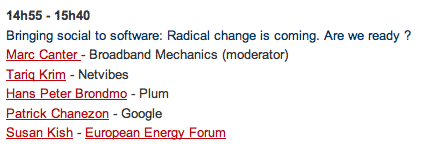
Google could have done this with OpenSocial. Watching the panel assembled by Marc Canter at LeWeb3, I was reminded of every tech conference I've been to for almost 30 years. Some big company sitting in the center, and lots of smaller ones sucking up to them, not daring to say what's obvious, that the big company is only interested in limiting the growth of an upstart (not present on stage of course). That's where the Fear comes in Fear, Uncertainty and Doubt. We don't say anything because we're too scared to. Even the outspoken Marc Canter, who's smart and has been around this block many times, doesn't dare say what's obvious.
Now Bebo decides to get in lockstep with Facebook, not Google. Of course! Facebook has the juice. But this is a dangerous place to be if Facebook doesn't want them there, and being a big company, they probably don't. The only value of having clones to FB is that it negates the threat from Google. Sometimes having clones is a good thing, but usually the clones take over the market. Witness MSIE and Netscape, and then Firefox. Compaq et al and IBM. dBASE and Fox. It's possible to depose an installed leader if it's possible to clone them. As a user and developer, I'd like to see FB be open to cloning. If I were a FB shareholder I'm not so sure.
One constituency that's sure to like the existence of clones are Facebook developers. Without choice in platform vendors, they have nowhere to go when the sole vendor decides to take over their market. With a viable alternative, unless FB is incredibly aggressive and builds its competitive features so they can run on competitive platforms, at least developers will have a place to run their apps when FB encroaches.
Platforms are a game, like Risk, with rules and strategies. Google did not play the game wisely with OpenSocial. I chalk this up to inexperience on the part of the strategists. So far Facebook has been doing what's needed to keep its dominant position. Bebo deciding to clone the Facebook API ratifies that position, it's a gutsy move, but the best one available to them, and to other would-be Facebook competitors.
PS: The news is slow to reach Europe. Facebook said yesterday that they support what Bebo is doing. Very enthusiastically. That should be the end of OpenSocial.
12/12/2007; 7:25:26 PM
Why I use Twitter
|



 So Evan has a point. Software design, if you're creating wholly new products, is like haiku. Find the smallest subset of a mature product that will attract people and ship it.

 There's a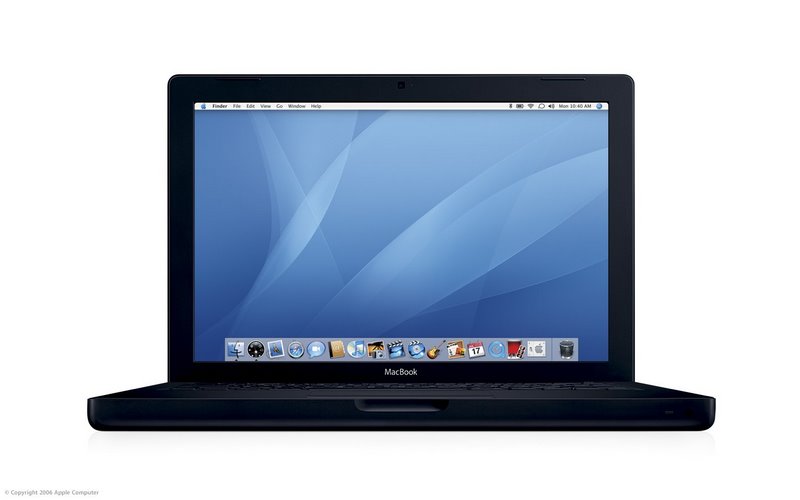
 I use it because it helps me keep in touch with people I want to be in touch with, without taking very much time. It serves a function that the links on Scripting News used to serve, but that was just a one-way thing. Now I get links and ideas from other people. It's an equalizer, a playing field leveler. It's useful the same way a cell phone is useful. Sure some conversations on cell phones might seem dull. So hang up. But don't get rid of the phone (and certainly don't make general statements about phones based on some people's conversations).