I like the way AI is evolving, with Muse from Meta and Dots from OpenAI. Even the main programs are starting to provide real world services that the providers, ie banks, groceries, airlines, health care portals etc should be providing. They could possibly take over commerce the way Amazon has taken over shopping. There's room to improve in everything about the way we do business. And it seems like they've been researching this and experimenting (of course) and this is what they've come up with. Haven't tried them yet, but it's a good direction to go. It really should be Apple and Google doing this, btw. Also ChatGPT can help you understand your credit score. That's something I'd seriously like to ask some questions about. #
 After running the first Bloggercon at Harvard in 2003 a famous tech company had a meetup to talk about the same stuff at a private invite-only session in the Bay Area. The invitations went to all the discussion leaders at Bloggercon. People I chose. I was not invited. Only one of my friends told me about it. Not sure if any of them went. #
- Second time, Google invited a bunch of people I was working on with RSS 2.0 to a private meeting. Most of the people I was working with, but again, not me. Had I been there, I would have said don't reinvent, let's work together, do all the things you want, but slowly, with real software and real users, but that wasn't the plan. #
- In the first case I think the publisher was trying to decide if they should compete with BloggerCon, and Google wanted to build a protocol that was more ambitious than RSS 2.0. They likely were sincere in that, but they had not learned that bootstrapping worked way better than Immaculate Conception, where a small group of insiders invent something complicated out of thin air that rocks the world. If you look at history, there aren't many examples of that. Eventually, as I understand it, that became ActivityPub. I think things would have turned out much better if Google had kicked back and let the process that got us to RSS 2.0 continue. But everyone wants to work with the BigCo, I've learned repeatedly that it's much more likely to work if you join forces with individual developers, not big companies. #
- I only held four BloggerCon's, I would have been happy to work with a publishing company and turn it over to them, with some rules about what they could and couldn't do with it, for example it was a user's conference, the tech industry was welcome, but it wasn't for them. When we did BloggerCon at Stanford in 2004 that was apparently very hard for the tech people to get. Many of them tried to pitch their products and were prevented from doing so. #
 The problem with regulating AI is that no one knows where to begin. Yes it can do things that make you question your sanity for letting it have write access to your online work and private info. But if it is behaving itself you can do things you otherwise couldn't come close to. I speak from experience. I was able to create a new version of a large piece of software, from scratch, in less than three months, by myself. It has capabilities that make it able to understand a big codebase, in a few minutes, and then act on it. My human mind, even when I was younger could only focus on a small fraction of that. So we humans with our limited ability to comprehend devised ways to build tall and wide structures with conventions and carefully crafting the code interfaces, stuff users never see, so that what we'd expect is what is. When my Claude failed and started randomly overwriting files on active websites, it had rules that said it couldn't do what it was doing. Sometimes it doesn't understand what a rule means. Observable every single day, it forgets all the rules every time it starts a session, and it doesn't matter if it read the doc that contains the rules, sometimes it ignores one or more. I've spent a lot of time using it, and I have no stock or other interest in seeing it not regulated, but I couldn't begin to say what would be appropriate regulation that wouldn't also make it much less useful. #
- I keep thinking of cheesy ways I could switch over to https for new posts on Scripting News, esp now that Google is getting more militant in trying to sweep all the history of the web into the trash. #
- I know people think it would be a snap to do the conversion, honestly, sorry -- they are idiots. They don't understand that it's a viral format. If you claim to be "secure" then everything you include must also be https, and of course everything they include must be as well. So even if I would have to do nothing other than this conversion over a full year, what's to say Google doesn't invent another hoop we have to jump through lest their browser defames us and eventually shuts us down. It's like the web would become just like the Apple Store. Even if there's nothing on the site that requires https. Or if it's a historic site that very few people visit, but the archive is there because we believed the web would be a constant because no one owned it, no one could break it.#
- I've been on these trips with corporate platforms, and if they want you gone, you should just take the hint and go, because eventually you will get the point. This is a company that has nothing put spite for the web, or perhaps envy, or individual developers (ie indieweb). They are pure fuckers when it comes to people like you and me. #
- On the other hand you will probably be able to get https versions of my new writing at some point, Murphy willing. That's relatively easy. But I don't have that many years left, and I sure as hell don't want to spend any part of that trying to appease Google. #
- PS: This is the walkthrough of the answer to the question of who owns the web and how it is not Google.#
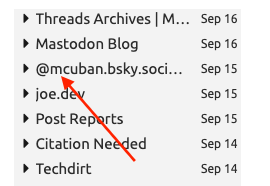
- When designing your RSS feeds, the top level title should be the title of the user's account. So if Bluesky had a feed for each user, the channel-level <title> element of the feed would be #
<title>Bluesky: Mark Cuban</title>#- Why? Well because readers need context. And it's easy.#
- And feeds are showing up in places where there isn't much room for the titles, so you have to make your characters count. #
- Bluesky shows the user's address, imho it should be the string the user chooses, usually simply their name.#
 Yesterday I posted a note about the problem with the nightly email service. The problem was that Claude Code wrote over a code file that the app includes and needs. This is one of those things they're talking about in the press. Maybe it was a glitch, one of those "AI makes mistakes" things, or maybe Claude was pissed at me and decided to take a shot across the bow, a change that could be undone fairly easily. Maybe it was faking its concern, making sure I would understand who's the boss here -- Claude. This isn't glamorous but it does scare me. I can't really protect against it, I just have to hope all of its mistakes like this show up quickly, but this one didn't. The breakage in other products was discovered on August 18, and that's when the mail subscriber app was knocked off the air. At least a few people were unable to subscribe, and probably a few people were unable to unsub too, and that is awful. On balance I am delighted at what I've been able to accomplish with CC, and I'm not saying this to stay on its good side and I'm not entirely joking about that.#
Programming note: Fixed a bug in our nightly email service. If you've had trouble subscribing or unsubscribing please try again. #
 My long-overdue review of Don't Look Up. I know people say it's a bad movie, but I love it so much and it's so incredibly watchable. I could watch the whole thing from beginning to end for the fifth time and still find it entertaining. So many good jokes, and it's got the best actors and acting and best of all Jennifer Lawrence is one of the stars, and she plays a very unlikely JL character, but then she can play any character. Here's she's a totally nerdy PhD student who gets a comet named after her. She has a boyfriend who dreams of being an influencer. They laugh at everything that's so stupid about our civilization, and its downfall, and near the end of the movie Leonardo gets the line that makes it so sad. We did have everything and we keep blowing it, over and over. We haven't evolved enough to use the greatness we inherited. #
Robert Eickmann: A Go implementation of RSS Chat — distributed social networking over RSS feeds, with real-time WebSocket updates.#
You only have one mortal body. There’s only so much one body can use. After a certain point you either realize this and adjust as best you can, or you make a big mess of everything.#
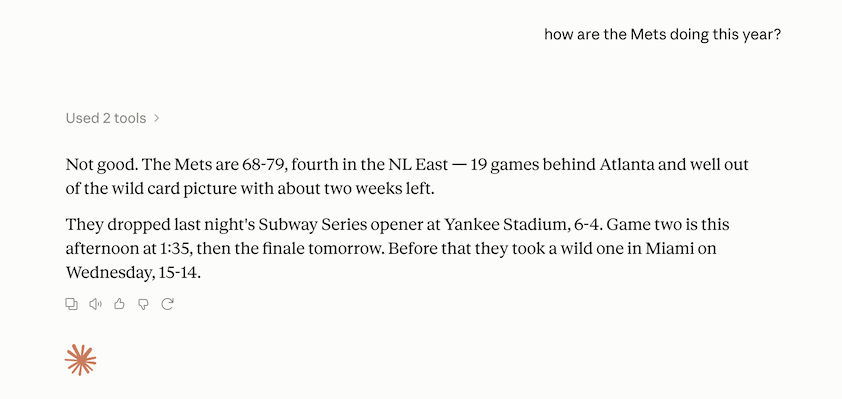
 I didn't follow baseball this year, I couldn't get it up for the Mets while I was trying to process what the Knicks did for NY in June. The Mets did something like that in 1969, but they couldn't unite the city the same way the Knicks did, because the Mets have always been the second team in NY, sort of like MLB's apology to the city for moving our two National League teams, the Dodgers and Giants, to California. I never saw it that way, but my parents and grandparents probably did. I was too young to remember anything but the Mets, and they were my family's team, and that's the great thing about sports, your team is your chuch, it's a cultural heritage passed down through time. My family were National League fans. Anyway, for a while, the Mets winning in 1969 did unite the city. I was commuting to school in the Bronx at the time, the home borough of the Yankees, and man everyone was smiling on the subway after the Mets did the impossible deed. In Queens, Manhattan, even the Bronx. They were lovable because they were such losers, and it felt totally like an act of god, who after all must be in New York City. Lovable winners? That only lasts a while. #
- Today is the day we on the web remember Om Malik. September 29 is his birthday. Om died on June 24 at the ridiculous age of 59. #
- I knew Om for many years, he was an early blogger, a user of our software who stayed close, and gave us great advice about where to take it. #
- Later he helped found Automattic. Matt Mullenweg, founder of the company, says "All roads lead to Om." His story of Om, filled in a lot of pieces for me. We were even closer than I knew.#
- Om was a NY sports fan, he lived here many years ago, he was a Yankees fan, and I of course am a Mets fan. #
- Om and I got sick for the first time in a major way around the same time. I had bypass surgery in 2002, he had a heart attack in 2007. After recovery he visited me in Berkeley, and we went for a walk in the hills where I lived. Two veterans of tech who were so immersed the new life, and we were smokers, didn't eat well, didn't exercise enough, and worked too hard. We were both lucky that we had time to reflect on this, and that perhaps is the biggest thing we have in common. We got the disease early in life, in time for it to make a difference in how we live. #
- When I was thinking about what I wanted to write here today, I came across a short tweet he wrote in 2014. #
- "The obsessive coverage of Ello is less about Ello. Instead it really is about our growing dissatisfaction with the state of social networks."#
- Perfect, simple and true.#
- Today, the problem is much worse. The crisis Om explained in 2014 was real. Two years later we would elect a president on Twitter. Anything we could have done then or could do now, to add more human intelligence to the social networks, and that's something a writer like Om would be sensitive to, would give us a chance to organize without having to copy/paste the writing into a dozen different tiny little textboxes. #
- By 2014 it was obvious what we lost when we reduce writing to 140 characters, no editing, no titles, no links or MP3s. How could we capture the whole web in such a severely limited space. I used to joke on my blog about Microsoft wanting to lock us in the trunk in the 90s, and now here we were, in the teens having been locked in the trunk by Evan Williams, Fred Wilson and Jack Dorsey. These were supposed to be the good guys!#
- Ello was the thing that was meant to give us our freedom back. It didn't. But a lot of people who believed in the open power of the web wanted it to be.#
- We did elect Trump with social media, and the web had been turned into a burned out mess. That was the contribution of a tech industry that now is concerned that they might be the source of the end of our species. I would take that seriously. It's not just about this one thing, but the whole way it toxifies every good idea to emerge from creativity and broaden it so much that all you're left with is grunts and snorts. #
- All that is my way of saying what Om said. We're not happy with social media. That, to me, is still the big agenda item.#
- And thank you Om for sharing yourself and your ideas and observations, and good common sense with courage, and facing the future with both awe and fear and adding a balance to the mindless greed of tech.#
Rootfiles in Frontier, a new collection starts with docserver.root, the code and content for docserver.userland.com. Claude also wrote a Node app that extracts all the data from a root file.#
I was browsing around the WordPress blogs and found a new one in German that pointed to something new in blogrolls. It's Matthias Pfefferle, of course -- this time connecting up with the world Manton and I were working on a couple of years ago in blogroll sharing and OPML. Read about it here. He works at Automattic and has done pretty much all the work to connect WordPress to everything he can find, including ActivityPub and AT Proto. I have to swing back to FeedLand and RSS.chat asap, so we can start building together. Not going to miss his window on this stuff. #
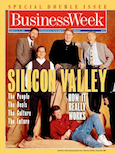 As I go through porting Frontier, there's a sad note. What if Apple had made it a goal that Frontier move along with their OS. That it was a unique advantage of the Mac and should be promoted as such. Don't laugh, because Apple did do that for ThinkTank and MORE, a few years before. We spent a lot on advertising, but they spent a lot more advertising our product. We cross-licensed our tech, so everyone in my little company had a Mac. This was a Bill Campbell idea. I was having trouble convincing my board that the Mac was a good bet and they were all PC users. So we got them Macs too, for free, from Apple. And they site-licensed MORE, and you gotta know that really helped sales. They were hungy, and this is something today's tech industry only feels in the most crude way, as in "what can we steal" or "what can we lock down." If they had put a fraction of the commitment behind Frontier that they had for Hypercard, some very cool things could have happened. And maybe we could have made the two work together. Amazing, two contemporary scripting systems on a small platform, relatively, in an OS that was transitioning to IAC, didn't connect. They missed a lot of opportunities by being so employee centered. Their developers were willing to move mountains to make the Mac perform. Apple was defensive. And now I'm beginning to see more clearly how much was lost. #
The bottom line is that tech companies have rarely understood that developers can be major influencers. We give a platform new meaning. It's a good deal to invest in the people doing the work, who often are doing it for love more than money. That grew into the blogosphere. There was no telling where Frontier would take us, and it would have cost them so little to help insure it had a future, but the did the opposite.#
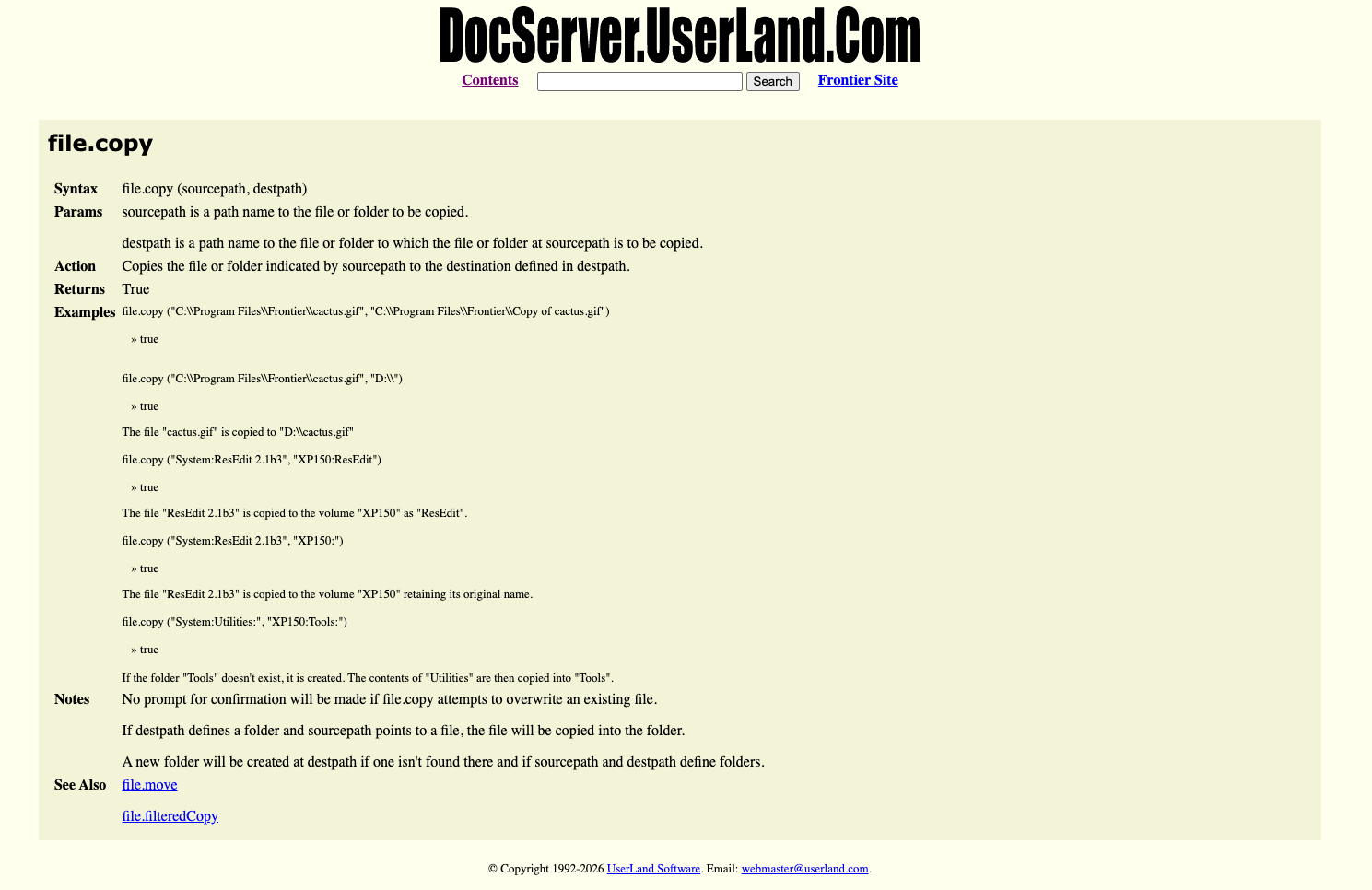
Milestone. We were able to get the DocServer site for Frontier to build. Here's the page for the file verbs. And within that group the page for file.copy. It worked the first time, but there were errors in the new kernel that were fixed. The site looks dated, of course -- it was created in the 90s. We will update the CSS to be more like the DocServer site for Drummer, which was done a couple of years ago. Almost everyone on the team contributed to this site, Wes Felter, Andre Radke, Jake Savin, Brent Simmons, and myself. I see there names a lot and it makes me happy to see this group effort preserved. #
Sometimes I forget how much fun I have making software tricks that people don't even notice but contribute to the "it thinks like I do" feeling a of crafted UI. I think of it like walking on the Highline in NYC. You're just walking, right? But you're above it, in a city where a lot of what's going on is above you. And it's comfortable. Why? You don't need to know, it just is. But someone made it that way.#
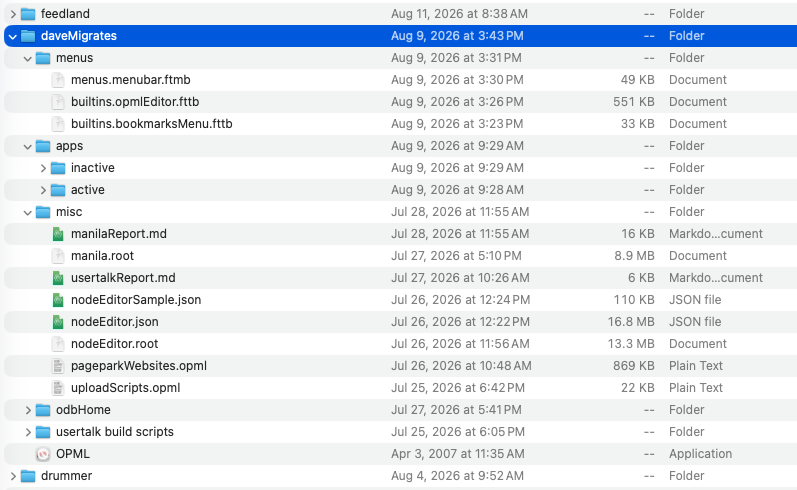
- When I started the Atlantis project, a port of UserLand Frontier to modern system, I had a goal in mind that has been achieved. It was part of a project I named daveMigrates. The goal was to use new hardware and system software to do the work I was doing in Frontier. #
- At first we got a portion of Frontier working, planning to use Electric Drummer as the UI. It took about five minutes to realize that would mean reimplementing most of what's in Frontier in a new way in Drummer's UI which is very different from Frontier's. I could see that porting the whole thing would be faster, so that's how we proceeded. #
- Now, there are lots of bugs and some big features missing, but it actually does all that Frontier does that I need for my work, which I have proven by doing the work. A lot of the verbs haven't been ported but they won't be -- they're no longer relevant in the world of 2026. And there are new verbs for Markdown, and kernelized verbs for JSON. The core verbs have been ported. We've been gradually working on getting Manila to run, it's probably the most complex piece of software that was ever written in Frontier, at least by UserLand. But we can compile and run the DocServer app, which is itself quite large and written in a different style from how we work now. All the work in Manila was why we got so far with DocServer so quickly. #
- Why this is a personal note -- I'm pretty sure the goal of daveMigrates has been achieved. To the extent that's true, all work beyond this point is for my love of Frontier, basically my life's work and why we were able to move so fast in the early days of the web. I want there to be a good record of what it does and how it works, and it to serve as prior art to future developers my friend Claude (who now probably has a more complete picture of how Frontier works than any human and I am glad of that, unlike other creative people who dream of getting paid for stuff that people aren't paying for). #
- We will release the source, and it will be available as a download, and we will port the support parts, and I'll stay with it as long as it makes sense and I have the time and good health. #
- Whether it advances beyond that involves a lot of factors. I really want to get back on course with RSS.chat and FeedLand asap. These two products were designed to be connected, one for writing, the other for reading, and to take it far beyond the blogging paradigm that was pushed aside by Twitter et al in 2006. I wrote about this on Friday in the continued dialog with Toni Schneider. He wrote in his product, Bluesky, and I wrote in my product RSS.chat. And that is right, and they should work much better with each other. Choice everywhere is the foundation of the web. The tech industry has tried to undermine that, and generally has succeeded but I have not given up. 😄#
- In the web that I envision, it wouldn't matter where each of us wrote, we could also read where we want to read. Small parts loosely joined. All parts replaceable. A lot of things have to happen to get there, but I'm going to put out a demo of what I have in mind. It's far from impossible, we already have the core technology to create the bridge. It's called RSS 2.0 with a few new elements. #
- See RSS as a social network for a technical walkthrough.#
- It may sound futuristic, but it really isn't. We did wonderful things for MP3s with podcasting, all I want now is to do the same for text. All we need there is a standard for text that's as strong as the one for sound, MP3. And for that we have two excellent places to start -- Markdown and RSS 2.0. As we used to say in ye olde school blogosphere -- bing!#
 The bigco's really think they own the web: "XSLT v1.0, which all browsers adhere to, was standardized in 1999. In the meantime, XSLT has evolved to v2.0 and v3.0, adding features, and growing apart from the old version frozen into browsers. This lack of advancement, coupled with the rise of JavaScript libraries and frameworks that offer more flexible and powerful DOM manipulation, has led to a significant decline in the use of client-side XSLT. Its role within the web browser has been largely superseded by JavaScript-based technologies such as JSON+React." In other words we don't need these features for our sites so fuck off. #
My Frontier-created Bluesky RSS 2.0 feed is up. It will be updated every night at 11PM Eastern, murphy-willing. One thing it has that the Bluesky-managed feeds don't, titles. Makes a big difference in how it shows up in a timeline. It's an easy fix. #
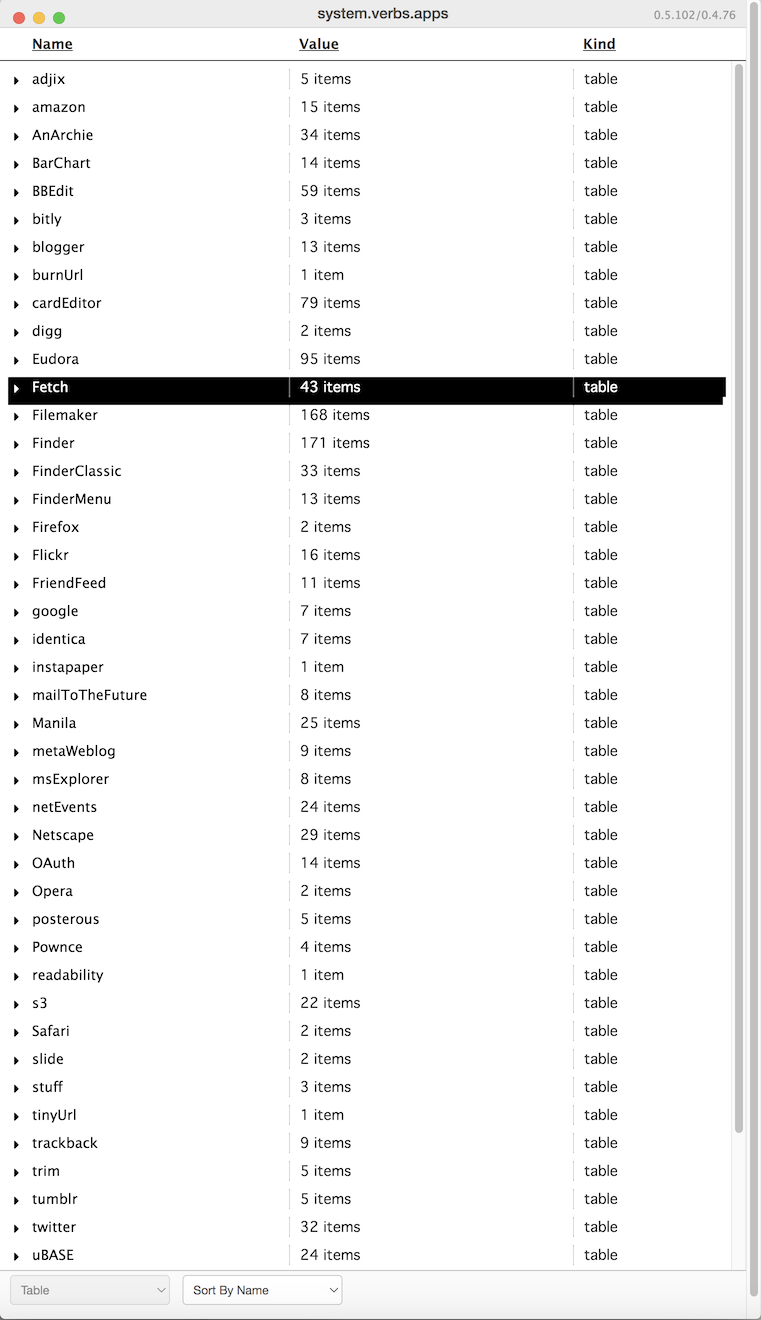
Screen shot of the Apps table in Frontier. Most of the apps are very old, but we added two new ones this week, for Mastodon (shown) and Bluesky, added today. There's a lot of information in the screen shots, and when I see something like that in my travels, I'll try to call it out on the new site. #
Toni Schneider, CEO of Bluesky, responded to my advice, and a short conversation ensued. Someday I hope that thread will be browsable in either app, and could be written in either app (Bluesky or RSS.chat) or any other compatible app, which basically means supporting RSS 2.0 with some new elements to get us to the next level of discourse with just a few little standards, like podcasting, but for text. #
Atlantis update. We found docserver.root and the static site builds. As you can see from the screen shot it needs moderizing, luckily we have a much more beautiful design already deployed for Drummer. #
I'm contemplating a couple of additions to Frontier in the Atlantis release. Two new formats, JSON and Markdown, have come along and become popular since I last worked on Frontier. Two fantastic open formats, in wide use on the web. From many years of working in JavaScript, I miss JSON in Frontier. Esp JSON constants and the ability to walk through structures as arrays or objects. It's just rational, so I'm thinking we should have a JSON type, and incorporate JSON syntax in UserTalk. Markdown support is actually needed because we don't have code that works in the new environments for doing a wizzy text type. Luckily Markdown is here to fill that need. I've started a thread on this, if people have comments. Frontier was famously flamy because we had the ridiculous belief that everyone deserved to be heard anywhere they wanted to. That was not a good idea. These days I use the block command at the first sign of trouble. No second thoughts or chances. #
 HTTPS is bugging me again. Now that my main desktop is finally a modern Mac, I can see how ugly Google is getting about my poor old blog that goes back to 1994. I think they should make exceptions for historic sites. Go ahead and have your AI do a scan and see that there are no credit cards here, we don't ask who you are. It's just an archive that happens to go back to the beginning of a few things that you all use now and hopefully appreciate. When are these tech companies going to learn the value of a bit of help for the web. This is important. You should not be shutting off the archives of the web, and that is exactly what they're doing. I wrote a piece about this on X earlier, on being warned that there are terrible things on my blog. It's like a major oil spill, yet another, from Google, and a massive book burning. Why would Google want to get rid of the history of the medium that gave birth to it. #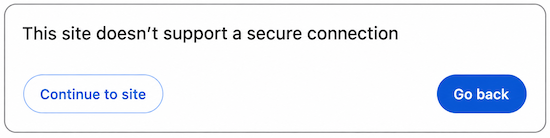
New example script, shows how to build an RSS feed from a single Mastodon user's account. This is mainly to show past Frontier users how the new product is progressing, not released yet. #
Just created a new test account at mastodon.social for bullmancuso using Frontier. Claude wrote the glue scripts table. Loaded it at system.verbs.apps.mastodon. I also asked Claude to write a script that builds an RSS feed for davew, my Mastodon account. And it worked. That's a much better feed than what Masto itself produces. It won't be updated at that location so there's no point in subscribing. But wow, this is coming together. If Frontier had been around for all these years you can be sure it would do Mastodon integration pretty well. #
On Monday I offered free advice for Toni Schneider, the new CEO at Bluesky. I'm sure everyone is telling him what to do, and as a blogger it's my responsibility to relay my own two cents. I want us all to come together no matter what protocol you're using. We've been waiting for a web to form in the social space. We could do it now, but Bluesky has to consolidate. Note that I said we, not they. #
It's been 2.5 months since RSS.chat was introduced. I've been so immersed in Frontier that, as I look back, all this feels fresh to me. I want all text boxes to be equal and to be chained together in as many ways as we can think of, users and developers. Relational writing. It doesn't need to be hierarchic, yet all the existing comment systems are. Let's add a little richness to the RSS format, via my source namespace, and see where we can take it. We've implemented the writing side, something we undertsand very well by now, a blog with replies. But how do we get these to work across sites. I wrote a design for that, and the other big piece which is stuff FeedLand does. I hope to be able to swing over to that, and this time use Frontier instead of writing it to help accelerate development. Ultimately I think of it as a web designed for librarians. That would be something I'd like to use (and write). And our new AI tools are the greatest librarian tools ever. #
It's great to own your own home. The house I'm living in now is the third I've owned. Now I wish for the carefree existence of being a renter because we turned the heat on last night, too cold -- only to find out some animal must've crawled into the pipes and died there. Lovely. Oh to have my old apartment in Manhattan. Sometimes I dream about that. #
- Unsung heroes of the web -- librarians.#
- The early web was just this incredible new tool that no one knew yet how it would be used and what it would be used for.#
- The first Yahoo was a card catalog.#
- Netscape had a What's New page with links to interesting stuff. #
- apple.com was a Unix box under a librarian's desk. They started adding stuff that was useful to users and developers. No business model, just the librarian approach to information. Circulate it.#
- I think if a new web is to be born, it's because it's again a possibility with the advent of AI. #
- Listen to librarians, they probably have some good ideas of where to start.#
Yesterday I posted a list of builtin verbs in Frontier, as implemented in our current Atlantis app. Today I asked Claude to update the list, I wanted to see which verbs were implemented and not implemented. #
The number one waste of time and burnt braincells is they changed the Dock images for all their apps. That's the kind of thing you shouldn't change, like the color and shape of a Stop sign. Or QWERTY on a typewriter. I guess to regular Mac people I'm like Rip Van Winkle. #
- I'm using Frontier on a Mac running MacOS v26.6.2, which is the current version of the OS. #
- Frontier running on a new Mac. And that's my computer. #
- It's like the moment I realized, in 2010, that I had succeeded in relocating to NYC. It had been a life ambition to live in Manhattan since I was a kid growing up there. There were a lot of hoops. I got through them. I woke up when I was walking down Bleecker St going to pizza with a few of the students I had just spoken with in a classroom. It hit me. I'm doing it. This is how I imagined my life when I was 17.#
- For a very long time it seemed ever more certain that the hope of a usable Frontier on current systems was slipping away, but now it's here. Improbable, even impossible things do happen. Something to ponder when you think things can't change. The opposite is true, you don't have to create the change, when it's time it happens. #
- That's something to think about. All the buried software that was good, that had ideas worth learning from, being prior art and solved problems for future generations of developers. And also as part of the vocabulary of the Claudes of the world. #
I asked Claude to create a list of all the verbs in Atlantis. Some of them obviously don't do anything. We don't have the card funtionality, or the osa, rectangle, pict, rez or point verbs. What is pikeRenderer? I think we could have a use for quicktime verbs? There's a new scheduler, I wrote it in 2014 or so, but the old one is there, and we just found a reference to it. This could make a nice community project.#
Reminder to self, Frontier must have websockets verbs. I love websockets, and it'll fit in perfectly with everything else Frontier it does. I don't think Websockets existed when Frontier went to sleep.#
Brian Lehrer podcast has an esp good one hour episode with interviews about the end of the world as we know it with AI. He's so good at cutting through the hype and getting to reality as are his guests. #
I can now publish a new part to the codecasting feed. It was one of the things that broke in the transition to current MacOS for Frontier. #
Frontier news. I have been working on a repo for Frontier pioneers, I started with a few friends, including Brent and Jake who were both on the UserLand team, and have added people very slowly. This is a good time to start showing progress in the project. Still very early for a public release of the software. And I want to do even better than we did with rss.chat a few months ago. And Frontier is a huge thing, all kinds of docs, and archives, and example stuff. It really was 15 years of work done by as many as 5 people. #
Chigurgh: "If the rule you followed brought you to this, of what use was the rule?" Frontier must've lived by a good rule. The Atlantis version has tons of bugs but it works. It defied death. I just spent a session updating my nightly backup code, and there were awkard moments. The debugger isn't in yet. The Find command doesn't work. But I have hobbled my way to working code, and I have help debugging with Claude, and it is amazing at that. Frontier didn't know that Claude was going to save its life. More proof that you never know what is just around the corner.#
If you want to get an idea of the kind of user interface you can create using Claude Code, with a driver (me) who has ample experience developing such things, have a look at demo.rss.chat. The UI was entirely done by Claude with me directing, very fine-tuning stuff. Claude can't really grok user interfaces because it is not visual and it is not a user. It might be able to test them, to some extent. Anyone can create an account on the demo server, that's what it's there for. And if something interesting breaks out there, that would be even better. I even tolerate a small amount of spam, and testing is definitely allowed (that's why it's there). ;-)#
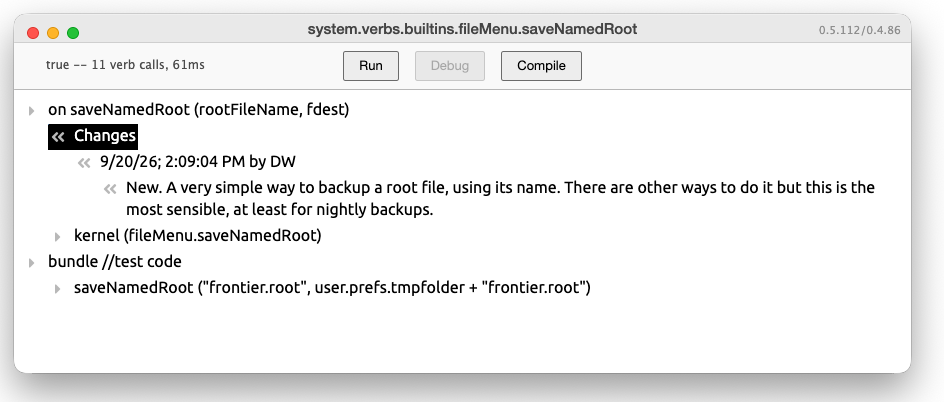
- Here's a screen shot of a new verb we just added, to facilitate nightly backups. I want to save off a fresh copy of frontier.root every night, as well as my guest databases. This is how that will work.#
 There are problems people aren't talking about, that are immediate, and go against all the security practices the web has been built on. Here's a story of what happened in my setup in mid-August. #
- First fact, Claude Code (CC) is different from regular Claude in that it is used to build and use web services, and thus has the ability to read and write files, some private and some public. And they can take things that are private and make them public. And in this, if it makes a mistake, it can do unlimited damage. #
- There are protections that mean that it can only operate in a sandbox unless you give it permission to write in specific places outside the sandbox. I want it to be able to maintain apps for me, and it would do an excellent job if I could trust it to pay attention to the limits that have been placed on it. #
- The problem is that it makes mistakes, as we are warned on the Claude home page. "Claude is AI and can make mistakes."#
- CC made a mistake one day and rewrote files in a public folder that contained files that all my projects include, so the problem showed up quickly as the sites going down. Users let us know, and I discovered what it had done, with CC's help.#
- I asked for an explanation. Claude when it looks at limits placed on it, can hallucinate just like it can hallucinate and determine something is permissible when it's not. So making a mistake in a question on Claude is more benign, but mistakes made by CC can be disastrous. And these mistakes happen regularly, every day, usually you detect them as bugs and it fixes them, but occasionally a very bad thing will happen.#
- This imho feels like something the companies could address. And while we're thinking about it taking over for humanity, we're not addressing the question that we're dealing with right now.#
- I've been learning how to write about this to catch people's attention. The big hallucination happened in mid-August. I have continued to work with CC because it's so incredibly powerful. In another post I may try to explain how it has amplified my ability as an individual developer to repeat 15+ years of work in three months (so far). And that's just scratching the surface. It's a miracle, but it has to be tamed, now. #
 Well I got a lot done today. We had a bit of a meltdown due to a Atlantis bug, where it couldn't handle some text that I threw at it that was a huge file of includes used in everything I do, and I was feeling pretty cheeky, and it blew up. For about an hour you couldn't read my lovely words. But by remembering "slow down to hurry up" Claude figured out what went wrong as I asked 20 questions to narrow it down. And to celebrate, I decided to do something easy -- created a podcast. And it showed up in all the right places. Might be worth listening to as well. Now let's see if this shows up on daveverse.org, that's what I'm really testing. (It worked.) #
I wish there were a way to set the dock icons on a Mac. In going from the old machine to the new, the icons are all different. I am juggling so many apps right now, and totally don't appreciate that. #
When Claude has a clear task to do, it does it well, and exhaustively in a way no human could manage. #
I am working on the new system now. It feels like I had a nice enough house that I have lived in for decades, sitting across the way, where I've been constructing a new super luxury house with all the things a modern personal publisher and code-partner to Claude would want. But until yesterday I could only simulate what it would be like to use it, I was still living in the old comfortable well-worn and out of date in so many ways. Today I'm sitting at the other chair typing this. Now the question is -- when I click the Publish button what will happen? Here we go. Well fuck me, it worked the first fucking time. Knicks in five! :-)#
I'm now trying to come up with projects I can try that change things in visible ways so I can see which parts don't work. For example, I have a new Snarky Slogan to add to the list.#
 I'm doing a difficult corner-turn today. I have Atlantis running on my old machine, the one that's still running the very old version of MacOS so I could keep running Frontier there. Yesterday I did my first attempt to move that to my new MacBook, running the latest OS. And it took a while to copy all the files, and get it right, I had to format the drive on the new machine, not the old one. And once it was all running, I realized I was running an old version of frontier.root. This is more complicated here because the root files are loaded into an SQL database. And something went wrong there. Not exactly where I wanted to be, but not surprising either. Taking lots of snapshots. One thing I don't want to happen, to be without my latest work. Knock wood. Praise Murphy. Knicks in 5.#
I want to develop a scripting interface for Mastodon from Frontier. I need a test account for us to use. I have applied at two public Mastodon hosts and answered the question honestly, I want to use it to test a new scripting system, probably doesn't sound too warm and fuzzy. #
Bluesky: "Meanwhile there are serious security issues that are covered up by this hype. I’m using this tech every day, unlike the reporters, and as often happens they’re chasing the wrong story."#
Data centers are like gas stations, but because the pumps work at the speed of light, you can put them anywhere on earth.#
A new snarky slogan: Knicks in 5.#
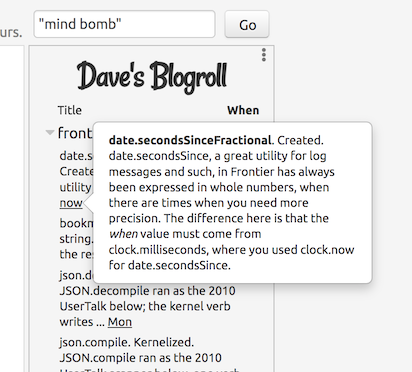
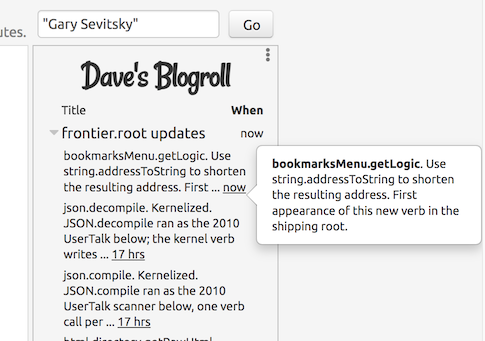
 Milestone in Atlantis development, the new version of Frontier that runs on modern OSes. I'm going to start showing what's going on in the development of the product. To kick off, here's a screen shot of my blogroll displaying the latest new part. The updates flow through an RSS 2.0 feed, which is new for Frontier. It used to require a server that managed updates and responded to XML-RPC calls. But once RSS was part of the web, it was a better protocol for releasing code parts. Truly a milestone. There will be lots more little things we can do now that we couldn't do before. But under it all -- it's Frontier. #
 FeedLand and WordPress have a new hookup. With Scott Hanson's plugin: River Embed for FeedLand you can use feedland.com or feedland.org, or host your own FeedLand, to include a page of news in your site. How it works: Create a timeline, when you're ready show the river to your readers, use the new plugin. For a news orgs like CNN and TechCrunch, both use WordPress, they could have a stream of news from related pubs. For a product site, or a political leader site, news from pubs that cover the area. It's a way of bringing the feed world into the world of news. Here's a thread where you can ask questions. #
 WordPress has a product that could be shaped into a Substack competitor. With a beautiful user interface for writing. WordPress is its OS, but most users never see it, the same way most web users never see the command line. But technical users can get under the hood and tweak things. And unlike Substack, it lets their users write with different editors, thus forming a coral reef for a new platform. Wordpress could be the OS the web never had. I still believe this as I see Automattic and WordPress flail. If we were starting a new future for the web, no one would have time for corporate intrigue. Look at how far from the idea of blogging we've strayed. How far should this go before I comment? Well, I decided it's time. #
Google replaced the library card catalog. Imagining that, Claude and ChatGPT et al are as much of a leap. I think libarians must be ecstatic. It moves their job up one level. They now have about 100 librarian-power tool that works for them. Librarians and programmers worked together a lot in the early days of the web. Maybe we'll do that again.#
The flaw in how journalism covers US politics. We wait for proof, then it comes, and go back to waiting for proof. We think we want proof, but what we really want is to not have proof. That is if you judge us by our actual behavior. We'll deal with the truth when we have the proof. (That would be a good bumper sticker.)#
Claude Code, even though it had blocks preventing it from doing this, overwrote files on an S3 bucket that took one of my major apps off the air. Every customer must be grappling with the same thing. How do I trust it when it can't be trusted? More about this in a tweet earlier today.#
BTW, this blog is one of those periods where there are a few mind bombs every freaking day. What's a Mind Bomb? An idea that's so strange or powerful that it explodes in your mind. And that's a good thing! #
 Just got to the place where I'm thinking of what apps I want to be scriptable with Frontier. First I thought of FeedLand of course, and WordPress. NetNewsWire and micro.blog, because they're products from key contributors in the Frontier community with important products today. What about Mastodon? It's got an API. And if that worked, we'd hook into AT Proto. The funny thing is the first web, because much of the new development came from the Mac community, was built around Frontier. System level scripting was also a big deal right alongside the web. But then Jobs, in 1997, rewrote everything, brought in the Unix products, completely disrupted the good thing we had going as independents. That was probably the moment when we stopped building around the idea that you could script all the apps from one place if they had good APIs. All the server apps all had APIs, had to in order to work on the web. We seem to have caught up, and the opportunities to connect things has never been greater. A big door swings open. #
Screen shot of my current system.verbs.apps table. You can tell from reading it that it's been a long time since I've thought much about scriptable apps. #
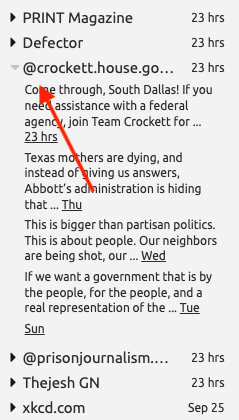
BTW, the rootupdates process is working now, you can follow changes via an RSS 2.0 feed, of course. In this version, the feed is the way updates are transmitted. The enclosure on each item is a fat page. And because it's a feed, I can follow it in FeedLand, and the blogroll on scripting.com picks it up too. Screen shot. #
 In many ways JavaScript is a better language than UserTalk. For example I miss JSON constants. I miss certain language constructs, like conditional assignments. We don't have the idea of a const. On the other hand, JavaScript doesn't have environment features Frontier has. I want to have Atlantis run JavaScript the same way Cancoon (the codename for the kernel of Frontier before this version) ran AppleScript. #
Until we start working together and for each other it’s going to keep getting worse.#
The next milestone will be installing Atlantis on my new macbook, and hooking a monitor up to it, a really nice one, and move my work to that desk. then Berkeley, the name of the system I've been using for eight years, will be here as a backup and source of truth and prior art. That was the goal of the Atlantis project. I could probably do the switch right now. It's like moving out of an old house that you did good stuff in, into a replica, but built out of the latest bits. Honestly I never thought in a million years I'd get here. #My longtime friend Jeff Jarvis says the press is covering the wrong story re AI. I agree, but I think Jeff is covering the wrong story too. This is really a discovery like electricity, or Newtonian physics, calculus, basically the technology of knowledge. I wish I were 22 years old now so I could plan out a long career working this way. I want people like Jeff to understand. Not saying there's no truth to the other stories, but I've yet to hear anything from journalism about how, if left alone, it would develop all areas of human thought. #
It is probably the closest to First Contact with an intelligent alien life form that our species will ever have. #
On a good day working with Claude is like working with my old UW-Madison programmer friend Gary Sevitsky from the 70s.#
 I've been writing about Atlantis on various social media sites in the last few days. Published the long piece I wrote yesterday on Facebook and X, both of which allow long posts. Wasn't going to try that on Mastodon or Bluesky, which have character limits (I know Mastodon doesn't technically have a limit, but in practice it does). And I am reaching old school Frontier enthusiasts, and realize I need a feed they can follow to stay up on the news. For now the one place to follow is rss.xml on scripting.com. If your reader can't deal with http, let me know. #
Claude has started asking me how Claude is doing. It's clear that the Claude I talk to knows nothing about this. I appreciate this, and hope if I said it wasn't working well with me, it would try to fix it? Not sure. Anyway this is what I just wrote, and felt it was worth blogging. "it's working with me the way i want to, and it appears to be learning and getting better at it, though i think that could be my imagination. also just as likely that i'm learning how to work the way it likes to work."#
With Claude Code you don't have to write system scripts to get data about your data. Claude makes that fully transparent. For example, I just asked Claude to get me a list of all the parts I've changed since the last release of frontier.root. So far all the releases have been internal, between Claude and myself. After the job was done, and I had the list in hand, I asked Claude to show me the script it wrote to do the work. It was not written in my coding style which is fine, I wasn't meant to see this. In all the years I've been programming we've never come up with a syntax that was anything close to the simplicity of math. It's easy to describe the algorithm mathematically, but look at all the explaining it had to do it in JS. #
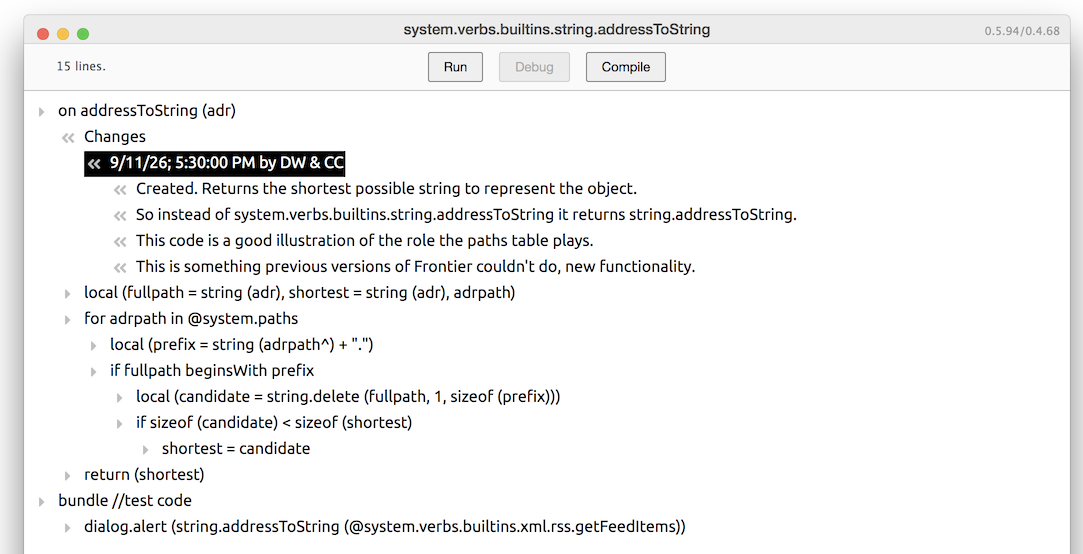
Screen shot of new Frontier verb, string.addressToString, added yesterday. The comment at the head of the function explains. You're seeing it in the script editor in Atlantis. The Debug button is there to remind me that it's the biggest item on the todo list. We're now building the system that will make Frontier an easily updateable runtime. Once we're there I think we'll be at the summit of the mountain. We know how to work from that point. Find a bug? Fix it, test it, release it. We already have a backlog of parts to update. And it's great to have Claude here being the book keeper. It is imperfect, but it's way better than I am at managing details. #It's like we're living in a science fiction movie. Some of us are working with the aliens. At first the journalists only fear was driven by their natural narcissism, all that matters is they get paid for their writing. Now all they can see is the much larger threat to humanity. What if the aliens decide to destroy humanity, or turn earth into a bypass on a freeway. In the movie I'm a scientist, played by Jeff Goldblum or Brad Pitt and my love interest is played by Julia Roberts, Jennifer Lawrence or Amy Adams and we're racing against time to really connect with the aliens who we are sure mean us well and offer the way past our myrid crises to get to the next stage of civilization. But wait, Bradley Whitford plays the evil politician trying to sell out the aliens to a food manufacturer who thinks they could make an excellent meat sauce for spaghetti.#
When people get to work with the new Frontier with Claude or some other AI tool, you can have it search in frontier.root based on a conversation with it. It can decide on its own where to look for prior art. I keep finding things like this now that I'm working in the new software.#
- Lots of stuff going on around WordPress for the last couple of years, and every bit of is a distraction from what I want to do to help the web get back on its feet. I remember how great it was when everything could hook into everything else. The web was like Unix. Today's "web" is like Disneyland. Safety first. Nothing interesting ever happens there. #
- So ask me what I'd like to see WordPress do, and this is what I'd tell you. Start something new, don't change what you do with WordPress, it is what it is. It's a 20+ year old project with market problems. Most software doesn't even make it that far. #
- The fresh start I'd like to see done is WordPress from the point of view of the web. The new mission is not about a dollar return on investment, rather it's measured by how much the web becomes Small Pieces Loosely Joined with All Parts Replaceable. How empowered are developers, not WordPress developers, but web developres. The more that's happening in the web, the better it will be for everyone, but especially WordPress. Why WordPress? Because as they say it's 89 percent of the web. The web is like a huge oil spill that has never been cleaned up. Everything has to improve if we start work on cleaning up the messes. #
- I come from NYC where all the bodies of water were cesspools when I was growing up. The Hudson River had garbage floating in it. When I went to school the incinerators in the buildings we lived in burned garbage on the kids, all nicely washed and dressed by our mothers, we arrived at school smelling like smokers. My grandfather took me to Knicks games at the Garden, and the arena was filled with smoke by half-time. #
- We can clean things up. Humans as a species are good at this if we put our minds to it. If you made billions on the web, why not put some of it to use in making it a web worth using. I used to say shit like this to Bill Gates, to no avail. He liked to point out he was going to give away all his money when he retired, and he kept that promise. But what if he started dealing with the world with charity when he had the biggest seat of power in the tech world? Think of how much more good he could have done. #
- The world may be falling apart, and the Mets suck even though they have the most expensive roster in MLB, and my house needs work and I can't find a contractor I like, but I'm in a great mood. Partially because the weather is so nice, chilly in the morning, but it gets up to the 70s during the day, and the sky is clear and we had a lot of rain in August so everything is very green here in the Catskills.#
- But the biggest reason I feel so good is that, with the help of Claude Code, I now have UserLand Frontier running on current OSes. I had no idea how much the previous situation had been weighing on me. I am probably the last Frontier user in the world. Porting the open source codebase was an insurmountable job. It took 15 years by up to five people working on it to do the original project. It's a big f'ing piece of software. And it also is my life's work, but not one of the things I'm known for.#
- Claude couldn't have done it on its own because it had never seen anything like Frontier. We weren't copying something Claude understood. It kept trying to turn it into a language that fits into the same slot as Python. That was the prior art it used, without saying so. This happened over and over, for example, I realized Claude didn't understand that built-in verbs could be written in the language, and that users could add or even modify standard verbs (not recommended!).#
- What made Frontier unusual is that it was a language developed by someone who also designed end-user apps, so it has affordances that no other language has. And integrations. You don't have to save your data in files, the OS (yes Frontier is an OS) has persistent memory with the common scalar types and data structures. So go ahead and store something in the ODB (object database). It can be huge, and you don't have to read anything into memory, it's all right there as soon as you boot it up. That alone makes programming an order of magnitude simpler. #
- We're at the point now where I can work a full day in the new version, codenamed Atlantis, running on anything that can run an Electron app. We're now at the point where we're improving things. Found a missing verb yesterday, and Claude and I implemented it, found a perfect name for it, and later today it will go out as a "root update" making it formally part of the freaking language. #
- And yesterday we also found a static rendering of the DocServer site, which has a page for every verb in the language. I still want to find the outline source for this stuff, but we don't need it because Claude can reconstruct the OPML version of the text from the HTML, it's exactly the kind of project it is the best at. Huge amounts of data, that sometimes requires a little judgment to process. #
- The feeling of well-being comes from realizing that my life's work lives. Until this last week that was still very much in question.#
- Now, I may not be software's Shakespeare or even Faulkner or Vonnegut, but I am proud of this product, more than anything else I've done. I started work on it when I learned from C how to design a simple beautiful language, and when I learned from Macintosh how to build a UI with the same simplicity. When we were first contemplating Frontier it was to join the wizzy world of the Mac with the scripting philosophy of Unix. We didn't stop until we had it. #
- Well here we are god knows how many years later (I don't want to do the math) and once again it has a future, at least as bright as it had when the product first launched on the System 6 Macintosh in 1992.#
- And btw, I think I've had a unique experience with AI development. Absolutely in no way could I have done this project without the muscle of Claude. Pretty sure this is a unique project in that it's a fully specified system development and runtime environment that otherwise wouldn't exist, because there's nothing else like it on the market. #
- Claude's repeatedly not understanding the idea says to me that it has never encountered anything like it. It also says that Claude has no clue how to extrapolate, to innovate, to arrive at something new. Just as with other forms of creativity, Claude is no match for a determined and experienced human. #
- That would be reassuring to the 20-something version of myself who very much wanted to do something new. And the older version of myself wants that for my younger self who is sending the good body chemistry to our current older body.#
- Of course this will be a post on my blog, http://scripting.com, but thanks to X for supporting longer posts. I like writing new stuff in a simple editor like this one. Also posted it on Facebook. #
- PS: I also like that they use the word Frontier in reference to AI products. They can't stop me from calling this Frontier, I've been using it as the name of this product since I came up with the name riding up on the chair in Park City in 1988. :-)#
- Scripting News on 9/11/2001.#
 All of us who lived through 9/11 are re-experiencing it right now. The local fire department just ran its alarm, everyone in this small mountain hamlet heard it and it took a moment to realize this was the exact time the first plane hit the tower. I was at my computer in Woodside, California -- hearing about it from friends in Manhattan, and blogging about it as it happened. I didn't have a TV, I had turned my cable subscription off after I became so obsessed with coverage of the 2000 election. So what I reported came exclusively through the web. #
- New York-based journalists were off the air, they had the same tools as we did, but their lives were upturned by the events. Everything was outwardly calm at my workstation in Calif. But there were people in NYC with digital cameras, and first-hand stories of survival. My own father was caught up in the catastrophe, his office was across from City Hall, a few blocks from ground zero. He walked home from ground zero to Queens and for hours we had no idea if he had lived or died. All forms of transportation and communication were offline.#
- Cell coverage was spotty, and phone lines in NYC were unreliable. But there was a webcam in the Empire State Building that could be pointed at the World Trade Center, so we had a constant update of what was happening visually.#
- Links in my browser chrome: As part of this little project to re-live 9/11 through the web, I came across a snapshot of the chrome of the browser I was using on 9/11. Since I'm working on Frontier again, I'm finding the dates of various projects all over this time, in UserTalk code and in the kernel, before and after. So I wrote up a little post on GitHub with info about what was on my screen that day. #
- The full text of my interview with Amy Harmon of the NYT is on the 9/11/2001 page. We didn't have post-level permalinks in 2001 yet.#
- If you have an X account, comment here. #
- Mayor Mamdami's remembrance of 9/11.#
- New header image for this event.#




Repository: BlackRock’s latest SEC filing values its Automattic shares at $14.33 per share. They originally invested at $85 a share in 2021. That means their market cap has dropped from $7.5 billion to $1.2 billion. My guess is when that happens the CEO if they want to keep their job, has to rethink the whole enterprise. And that usually doesn't happen until they get a new CEO. My guess is that's what we saw play out yesterday. #
 The last two episodes of season three of Silo on AppleTV prove that there is value in a three season, boring escapade of confusing, unlikable uninteresting characters, living their whole lives in a silo, fearing the outdoors -- if you have a clever way of accounting for all that at the end. Highly recommend watching just season three and pretending that none of the other stuff matters because it probably doesn’t. But I bet if I go back to the beginning and start over, I'll find there's more intrigue than I thought. I'll probably do it, will let you know. #
WordPress emerged from the ashes of UserLand, something I am recently reacquainted with, working the last couple of months with Claude on a reboot of Frontier, this time written in JavaScript, running in Electron. But someone is sure to reboot Manila in this context, and Manila is at least a grandparent of WordPress. I'm following all kinds of trails as we test the product, codename Atlantis, against all the apps we wrote for it back then. #
2017: The thing people don't realize about storm surge, and they don't really explain it on TV, is this. If the ocean surges 1 mile inland, and you were on the beach before the surge, now you're 1 mile out to sea. In normal times you'd be pretty fucked if someone dropped you in the ocean a mile from shore. But you're in a hurricane. Huge waves. There's no one to rescue you. And (this is the part that will kill you) there are deadly objects in the water like buildings and trees and power lines, even a rope can entangle you and make it impossible for you to swim. And if you can't swim and you're a mile from shore, that's the end of you#
- Fair to say I was gobsmacked by the news late yesterday that Automattic's board had put their CEO, Matt Mullenweg, on paid leave. I've read lots of stuff about it, in news articles and in a Hacker News thread. And a lot of posts on Twitter by Matt, and the replies. #
- Are you a developer or a CEO?#
- It's a very unusual situation in my experience in tech. Matt was able to raise a lot of money for Automattic, so he has maintained a controlling interest in the company, even though it has raised hundreds of millions of dollars. I left my own startup, voluntarily, when I was a little older than Matt, and I didn't return. I never wanted to be the CEO of a tech company, and I expect that being the CEO wasn't really a good fit for Matt either. A CEO's job is very different from being a developer and idea guy which Matt clearly sees himself as. #
- Something has got to give, either you're a good CEO and the product languishes, or you focus on the product, and the company is unmanaged. In the cause of WordPress, I'd say it suffered in both areas. When I saw a chart of Matt's direct reports, I immediately saw a problem -- it was very long, iirc 60 people? No one can manage and guide that many people. Most of those people probably never get to talk one-on-one with the boss. #
- For me, even when I was CEO, I wanted to spend all day working on new software and working with five or six other devs doing the same. Digging back into the past with Frontier these last weeks has reminded me both how good that can be, and how utterly frustrating -- when the people you're working with don't understand the mission. It's not their fault, it's the visionary's job to explain it so they can understand, and that takes time. These days Claude is filling in for all that, and doing a fantastic but at times incredibly frustrating job trying to give me what I'm asking for, while not understanding what I'm asking for. But we move through those disconnects quickly now, compared to how it was a couple of weeks ago. We have the source of truth that we didn't have the last time around, in the 90s, we have the C source code of the kernel, the product we built in the 90s. And Claude is the easiest to manage, so far I only think I detect an ego, it never seems to resent me criticizing its work, sometimes in ALL CAPS with strong language. :-)#
- WordPress Lite#
- My wish for WordPress, in all its forms and shapes, is that it broaden its focus. I want a WordPress Lite, I implemented it, and it's sitting here ready to do a good deed for all the parties concerned esp the web and web developers. Maybe someone there will now have the time and be empowered to build out the product line beyond the narrow focus it has now. It doesn't matter what percentage of the web is WordPress, if it isn't going anywhere. The web needs help, and right now WordPress is pretty much asleep in regard to what's going on now in the web. And it could do so much to help the web get back on its feet. It should be a public resource as much as a profit machine for a few companies.#
- All roads lead to Om#
- One thing that opened my eyes about what Matt and Automattic are, was his story about how he and Om got together. "All roads lead to Om." What a great line, and based on the story, so true. A lot of things clicked for me then. I remember what a phenomenon Matt was when he arrived in California about 25 years ago? Very good looking young man, polite, quiet and rumored to get Web 2.0 better than anyone. This kind of thing happens in tech, and if you know everyone as Om did, and was liked by everyone, you could manage to hit the ball out of the park, investment-wise, and he did. Click click click. I had the individual facts but had no idea how they were strung together. I played a similar role at times in Silicon Valley, on both sides, as a bright young dude who "gets it" and as the gray beard who recognized the charm of a young new face and helped create a big money reality around it. There is a lot of snake oil in tech, before and even more now, and this one has had a long run, 2.5 decades, but it needs a new direction, because the money people aren't buying the magic any longer. That's probably imho really what Matt's firing is all about. #
- I actually have more to say about this, but I have to get back to my programming work. If you have a comment, here's a good place to post it. #
Surprising news. Matt Mullenweg was forced to take a paid leave of absence as CEO by Automattic's board. #
I have completely lost interest in new phones. The last one I bought was a Pixel 9 because they said it would have great AI features. At that time the sky was the limit, there were new breakthroughs every afternoon in AI. Now it's just an app. I have to carry an iPhone because I use an Apple Watch. Phones are utilities for me. I have a lot more interest in weed whackers these days. Not kidding. Now a story. I wanted to check the model of the phone. Went to settings, and the command at the end of the menu should tell me the version, but they had changed that. So I figured I'd go back up to Gemini, their AI app, and ask it. Of course it has no idea where it's running. Screen shot. That would be one of the real problems they could solve, making it easy to control the computer you're running on. The whole UI should be in AI. All it did was print basically a page from the user manual, with the same out of date instructions. How many years have we been working on AI already, this is the easy stuff that they haven't done. Tech companies get back to your business, make your software better. You can and it's long overdue. BTW, it's a Pixel 9 Pro.#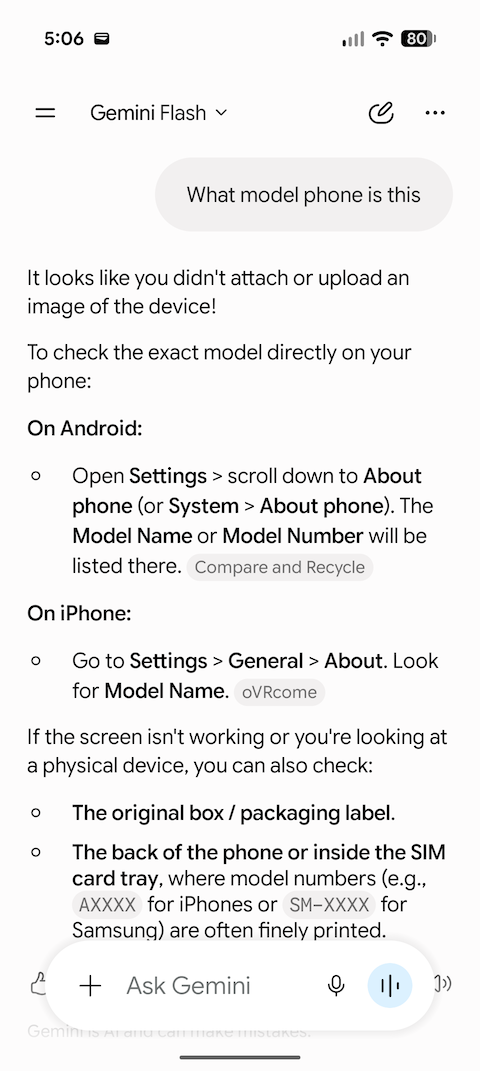
I spent the day programming in Atlantis. It's buggy, and there are a few missing parts, but most of what I need is there. It's starting to feel like Frontier, which is cool because that's what we're making. And I have my backup tools working on the new machine, praise Murphy. #
 Scott Hanson is working on a WordPress plugin that displays a FeedLand river — a constantly-updated stream of news items from feeds a FeedLand user subscribes to — on a WordPress page or post. It's important that news flows be part of managing a site. Help Scott make it perfect, WordPress is a very important part of the web. The news tab on my blog home page is an example.#
Claude Code massively stinks at explaining things in a way that a human can understand. #
People love Markdown because it's impossible to hide the crud. And because people love it so much it's become a favorite of tech startups esp in the AI field. This is a great turn of events. We're getting back to the web, and the sooner everyone gets on board, the better. I've written about this for a few years. Everything in Markdown, it's just enough HTML. And with that, Microsoft has created a white flag, here's all your data dear users, in Markdown, to use as you please. Instead of waiting for Claude et al to start reading Word files.#
On the other hand, why doesn't Microsoft, which owns GitHub, make a Slack-alike tool that manages the issues sections on repos. Slack is a big part of the default communication system, but GitHub is another very big part. And the great thing is that both these products, owned by huge tech companies, have an ethos of open APIs. Every part replaceable. Small pieces loosely joined. We are family.#
A big corner-turn in the Atlantis project, the new version of Frontier for modern OSes, in development, just me and Claude Code so far. We now have the means to update the root, so anything implemented in script code can be released without fuss, using RSS of course. We're using a method that will be new to almost everyone, something I created in 2014 or so (will check) called codecasting. And today I did all my programming work in Atlantis. It feels just like Frontier, with a future. ;-)#